
 AI Governance
 Data Centers
 Drones
 Climate
 Privacy
 2026 Maine Senate
 Bob Dylan
Meta Smart Glasses Privacy Risks
Coverage from Engadget, News Tribune, and others
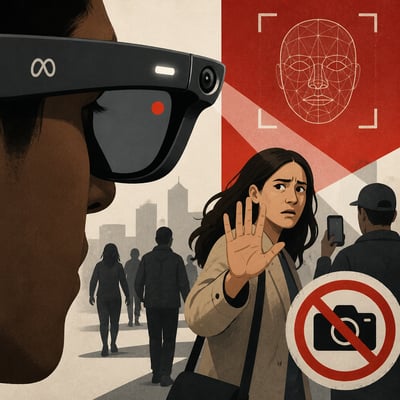
Meta's camera-equipped smart glasses face sustained scrutiny over covert recording, bypassable privacy indicators, reported human review of footage for AI training, and proposed facial recognition tied to social data.
Meta has released safeguards and reportedly removed dormant biometric code, but has not confirmed a consumer facial-recognition launch.
The story has shifted from primarily questioning dormant facial-recognition technology to broader concerns about the downstream handling of recordings, including alleged overseas human review for AI training. Facial recognition is now framed as exploratory, while concrete disputes over consent, data handling, and accountability receive greater emphasis.
The story remains largely consistent but is now framed more broadly: reporting extends beyond dormant facial recognition to biometric licensing, footage labeling, AI training, lawsuits, and investigations. Meta’s privacy response is also described as an ongoing rollout of technical safeguards and guidance rather than a one-time measure.
The facial-recognition concern is now more concretely tied to dormant NameTag code and a reported technology supplier, while Meta says the capability never shipped and was removed after scrutiny. New demonstrations of bypassing safeguards reinforce doubts about whether existing privacy controls are effective.
Meta Ray-Ban smart glasses are facing growing scrutiny over hands-free recording, limited bystander awareness, harassment filmed in public, and reported plans to add facial-recognition capabilities. Meta has responded with software safeguards, privacy guidance, and Instagram enforcement against abusive content, but critics argue that recording lights and platform rules do not fully address consent, biometric profiling, or misuse risks. The issue is broadening from product design to venue restrictions, regulatory questions, and public opposition.