
 AI Governance
 Data Centers
 Drones
 Climate
 Privacy
 2026 Maine Senate
 Bob Dylan
Meta Smart Glasses Privacy Risks
Coverage from WIRED, The Guardian, and others
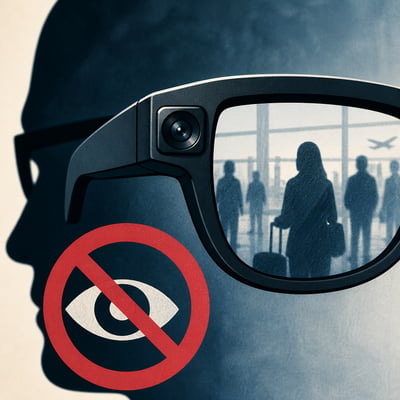
Meta's smart glasses are being pushed toward facial recognition and other always-on biometric features, while privacy scrutiny grows around covert recording, bystander consent, data labeling, and state-law compliance.
The current signal is dense and coherent, with Meta at the center and recurring concern about whether consumer eyewear is becoming a practical surveillance device.
The story has shifted from a pre-launch push to block facial recognition to evidence that Meta may already have developed NameTag and that its smart-glasses ecosystem can route media through Meta systems, bringing concrete biometric and data-handling risks to the foreground. It also now includes user backlash and partial product-side responses, while the legal frame has narrowed toward state biometric privacy law compliance.
- Meta developed or tested a face-recognition feature called NameTag.
- Smart-glasses media can route through Meta systems and be reviewed by contractors.
- Users are disabling cloud uploads and tightening privacy settings.
- Meta released a camera-protection update.
- State biometric laws in Illinois and Texas now shape the legal risk.
The story has shifted away from Google and Samsung’s upcoming AI glasses and now centers on a separate, more urgent Meta regulatory fight over facial recognition in smart glasses. The new emphasis is on preemptive government intervention to stop biometric surveillance before consumers can buy the feature.
- EPIC is urging the FTC and state regulators to block Meta's facial recognition plans.
- U.S. senators are raising concerns about the feature.
- The feature could identify people in real time with little visible warning.
- Advocates warn of stalking, harassment, and doxxing risks.
- Meta platform data may be linked to facial identification.
The story has shifted from a broad privacy concern around smart glasses to a more specific product launch story centered on Google and Samsung’s Gemini-powered Android XR glasses. The biggest new development is that privacy uncertainty now attaches to a concrete upcoming device plan, with retention, AI training, and bystander safeguards still undisclosed.
- Google and Samsung are co-developing Gemini-powered smart glasses.
- The glasses are tied to Android XR.
- Expected features include translation, messaging, navigation, and camera recognition.
- Google says privacy design work is underway.
- Launch is expected in fall 2026.
The story has shifted away from Meta employee monitoring and now centers on AI smart glasses as a broader privacy and surveillance issue. The new emphasis is on bystander recording, biometric capture, and fragmented regulation across workplaces and public spaces.
- AI smart glasses can discreetly record people in public spaces.
- Bystanders often lack notice or control over being recorded.
- Wearables may collect facial and other biometric data.
- Workplace deployment raises additional privacy concerns.
- Current legal protections are fragmented across jurisdictions.
The story has shifted completely from consumer-facing smart-glasses privacy concerns to Meta's internal employee surveillance for AI training. The new reporting adds a formal pause, broad employee backlash, and allegations that worker data may have influenced performance and layoff decisions.
The story has shifted from a narrow warning about a planned facial-recognition feature to a broader, more concrete debate over how Meta smart-glasses data is captured, routed, reviewed, and constrained by biometric law. It now includes reported product details, Meta executive denials, and some implementation of safeguards.
- Reported face-recognition feature is named NameTag.
- Andy Stone publicly disputed that the feature exists.
- Meta AI app and cloud handling of smart-glasses media are now central issues.
- A mandatory update reportedly blocks camera use if the LED is tampered with.
- User behavior has changed in response to criticism.
The story has shifted from Google-Samsung smart glasses privacy questions to a more urgent regulatory fight over Meta's reported facial recognition feature. The new focus is on whether regulators and lawmakers can stop a biometric identification capability before it reaches users.
- EPIC urged the FTC and state regulators to investigate and block Meta's feature.
- U.S. senators warned about mass surveillance and profiling risks.
- Meta previously removed facial recognition from Facebook.
- Reported launch timing could be as early as this year.
The story has shifted from broad privacy concerns about smart glasses to a more specific product update: Google and Samsung are now actively preparing Gemini-powered glasses, making disclosure gaps around retention, training, and bystander protections more concrete. The competitive framing has also sharpened, with Meta's backlash serving as the key warning case.
- Google and Samsung are preparing Gemini-powered smart glasses.
- The glasses will be built on Android XR.
- An audio-first model and later display-equipped version are planned.
- Google's Gemini terms allow extended retention for some activity.
- A bystander LED indicator is being signaled as a privacy measure.
The story has shifted from Meta’s internal worker-monitoring controversy to a broader debate over AI smart glasses as ambient surveillance devices. The new framing expands the issue from workplace data misuse to public and biometric privacy risks, with stronger attention to weak consent and fragmented regulation.
- AI-powered smart glasses are now the central subject.
- Bystander consent and covert recording are newly emphasized risks.
- Facial recognition and biometric capture are now part of the debate.
- Fragmented legal coverage is a new theme.
- Workplace use raises distinct monitoring and accommodation issues.
The story has shifted from consumer smart-glasses privacy concerns to Meta's internal workplace surveillance practices around AI training and employee evaluation. The biggest new element is that the company reportedly paused the monitoring program after backlash and data exposure concerns, while a lawsuit now alleges the tools were used in layoff decisions.
- Meta paused its Model Capability Initiative after employee backlash.
- The program tracked keystrokes, mouse clicks, screenshots, and app activity.
- More than 1,600 employees signed a petition opposing the monitoring.
- A lawsuit alleges AI monitoring and productivity scores were used in layoffs.
- Reported exposures included prompts, transcriptions, private conversations, and performance data.
The story has shifted from a potential facial-recognition rollout to a broader, more specific privacy dispute about how Meta’s smart glasses and Meta AI app already handle faceprints, media, audio, and cloud processing. Reporting now adds that NameTag code was reportedly built into the app and removed, while legal risk under Illinois and Texas biometric laws has become central.
- NameTag code was reportedly embedded in Meta’s companion app, then removed.
- Dispute now centers on on-device versus server-based face matching.
- Illinois and Texas biometric laws are now a central legal focus.
- Privacy concerns now include cloud uploads, contractor review, and saved audio.
- Meta has reportedly targeted LED-hack tutorials with anti-tampering and legal threats.
The story has shifted from Google/Samsung's still-unsettled smart glasses to a regulatory push aimed at blocking Meta from adding facial recognition to its Ray-Ban Meta glasses. The new focus is on imminent biometric surveillance risks and coordinated pressure from privacy groups, senators, and regulators.
- EPIC asked the FTC and state regulators to block Meta's facial recognition feature.
- U.S. senators publicly challenged Meta's smart glasses facial recognition plans.
- Critics say the feature could identify people in real time.
- Concerns now focus on protests, clinics, houses of worship, and support groups.
- Meta may be looking to launch the feature soon.
The story has shifted from a broad privacy-surveillance concern about smart eyewear to a specific forthcoming Google-Samsung product launch centered on Gemini-powered Android XR glasses. The key new issue is not just covert recording generally, but unresolved product-specific questions about data retention, model training, and breach handling before a fall 2026 release.
- Google and Samsung are preparing Gemini-powered smart glasses.
- A fall 2026 launch is expected in select markets.
- Google's privacy hub covers Gemini on Android XR.
- Coverage discusses audio-first and display-enabled variants.
- Pricing, battery life, and full policy terms remain undisclosed.
The story has broadened from Meta’s specific facial-recognition controversy into a wider policy and market debate over AI smart glasses as a privacy and surveillance problem. The key new development is that multiple major platforms and legal frameworks are now part of the story, shifting attention from one product launch to the broader regulatory gap.
- Google, Samsung, and Snap are now part of the story.
- Employers and workplace settings are newly implicated.
- Illinois BIPA and the EU AI Act now frame the legal debate.
- California SB 1130 appears as a proposed wearable recording restriction.
- Weak or tamperable recording lights are now a concrete concern.
The story has shifted from Meta’s internal employee-monitoring controversy to a new external privacy fight over reported facial recognition in Ray-Ban Meta smart glasses. The new angle adds regulators and lawmakers as active opponents, with pressure building to block the feature before launch.
- Meta is reportedly planning facial recognition for Ray-Ban Meta smart glasses.
- EPIC and U.S. senators are urging regulators to block or investigate the feature.
- The FTC and state privacy enforcers are now being directly pressed to act.
- Law enforcement use of smart glasses has heightened surveillance concerns.
- Reporting suggests the feature could launch as soon as this year.
The story shifted away from smart-glasses biometric privacy and now centers on Meta’s internal employee monitoring program for AI training. The new reporting adds a concrete backlash, a pause in the program, and allegations of broader internal data exposure.
- Meta paused an internal employee monitoring program for AI training.
- More than 1,600 employees signed a petition opposing it.
- Sensitive internal data may have been broadly accessible inside Meta.
- The program is called the Model Capability Initiative.
- Reporting linked internal monitoring to performance and layoff disputes.
The story has shifted from a prospective Google-Samsung smart glasses launch to a live Meta privacy controversy centered on face recognition and biometric law. It now includes a concrete safeguard rollout and evidence of user behavior changing in response to backlash.
- Reported NameTag face-recognition feature tied to Meta smart glasses and Meta AI app
- State biometric laws now central, especially Illinois and Texas statutes
- Meta issued a mandatory update disabling the camera when the recording LED is tampered with
- Some users are reportedly wearing the glasses less because of backlash
- Meta executives publicly denied the feature existed while discussing wearer-only identification
The story has shifted from general concerns about smart-glasses surveillance to a specific near-term product launch by Google and Samsung. The new emphasis is on unresolved privacy terms for Gemini-powered eyewear, especially how visual data will be retained and used.
- Google and Samsung are jointly developing Gemini-powered smart glasses on Android XR.
- The glasses are planned for a fall 2026 launch.
- Google's Gemini privacy terms allow long default retention for some activity.
- Eyewear-specific policies for visual input remain undisclosed.
- The devices will emphasize translation, navigation, and app-linked assistance.
The story has broadened from a Meta-centered privacy issue into a wider consumer smart-glasses surveillance problem. The current version puts more emphasis on weak recording indicators, public covert-filming incidents, and the category’s mainstreaming faster than consent rules can adapt.
- Weak or tamperable indicator LEDs are a recurring design concern.
- Public covert recording and online posting are driving backlash.
- Meta is no longer the only focal point; camera wearables broadly are under scrutiny.
- The issue is now framed as mainstream ambient surveillance.
- Legal protections are described as fragmented and lagging social norms.
The story has sharpened from broad privacy concerns into a more specific and operationally serious debate about real-time facial recognition, biometric processing, and compliance risk in Meta’s smart glasses. The new framing emphasizes enforcement exposure under state privacy laws and the possibility that consumer eyewear could function as a practical surveillance tool.
The story has shifted from a general privacy controversy around Meta smart glasses to a more specific, higher-stakes focus on a reported NameTag facial-recognition feature and the regulatory questions it raises. New reporting also adds uncertainty about how far the feature has progressed, including conflicting executive statements and removed code.
The story gains concrete detail about Meta’s facial-recognition work, including the reported "Name Tag" project and a biometric vendor connection, while Meta maintains that no such consumer feature has shipped. It also broadens into actual workplace restrictions, with Southwest Airlines limiting recording wearables.
The story now includes concrete signs of internal caution: Meta reportedly limited or delayed facial-recognition deployment and paused employee-monitoring programs after restricted data was exposed. This shifts the framing from mainly anticipated privacy risks toward uneven safeguards and active containment.
The story has sharpened from general concern about consumer smart-glasses surveillance into a more specific, sustained focus on Meta's reported facial-recognition feature and the regulatory response around it. It also newly ties the broader surveillance theme to a separate workplace-monitoring exposure involving Meta internal data.
- Meta is reportedly developing a facial-recognition feature called Name Tag.
- OAIC is now a cited regulator in the story.
- Biometric faceprint storage and reuse are newly emphasized.
- Meta workplace keystroke-data exposure is now linked to the surveillance theme.
The story has broadened from Meta's specific facial-recognition plans to a wider surveillance and regulatory framing around consumer smart glasses. The latest version puts less emphasis on a single product decision and more on ongoing scrutiny of public-space identification, consent, and uneven rules for wearables.
The story has shifted from general privacy scrutiny to a more specific, active product-development and compliance question: Meta is now reported to be testing facial recognition and related biometric checks for its smart glasses. That raises the perceived urgency because the feature appears technically close to deployment and is drawing sharper regulatory and civil-liberties attention.
- Meta is testing facial-recognition capabilities for Ray-Ban and Oakley smart glasses.
- Reporting adds liveness-detection testing to the feature set.
- Concerns now include biometric faceprints and identity matching to platform data.
- Meta says the feature is disabled or exploratory.
- Regulators and advocates are treating rollout as a live enforcement issue.
The story now centers more specifically on an actively developed Name Tag feature for Meta smart glasses, with new reporting that code was reportedly removed after exposure. The privacy concern remains the same, but the latest version adds clearer evidence of ongoing implementation and operational caution.
The story has shifted from general concern about facial recognition in Meta smart glasses to a more concrete implementation picture: the feature now appears as Name Tag, tied to specific product lines and linked data practices. The regulatory and consent debate remains the same, but the current version makes the rollout feel closer to deployment and more operationally defined.
The story has shifted from a general privacy controversy around Meta smart glasses to a more concrete claim that facial recognition and biometric matching may already be active in the software stack. The latest version also broadens the issue by tying the same privacy concerns to workplace tracking used for AI training.
- Facial recognition may already be active in the glasses software stack.
- Meta's employee tracking is being used for AI training.
- EFF and EPIC are now highlighted as key critics.
- The current framing includes streets, protests, clinics, and workplaces as sensitive settings.
The story has become more specific and regulatory: Meta's smart-glasses privacy concerns now center on a proposed "Name Tag" facial-recognition feature, while scrutiny has expanded to named U.S. and European regulators. The scope also widens to Meta's internal employee monitoring, linking consumer wearables and workplace surveillance more directly.
Smart glasses are moving from novelty hardware toward biometric-enabled wearables that can record audio, video, and identity data in public and workplace settings. Most of the current signal concerns Meta's facial recognition plans, with Google XR glasses adding a parallel privacy question. The recurring issues are consent, bystander notice, anonymity loss, regulatory gaps, and the possibility of law-enforcement or employer misuse. The topic is coherent and current, with a dense signal and a clearly ongoing technology and policy shift.