ICE Expands Domestic Surveillance ToolsICE Expands Domestic Surveillance ToolsCoverage from CNN, WSJ, and others
00/00/0000
DailyWeekly
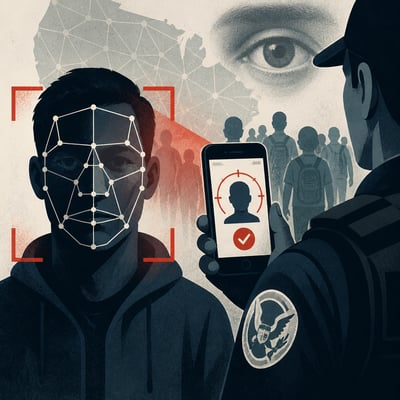
ICE and other Department of Homeland Security components are reported to be expanding their use of facial recognition, license-plate readers, geofencing, phone forensics, social-media monitoring and data-broker information to identify and track people in the United States.
Reporting also describes plans to extend some capabilities to local police and to combine immigration records with government, commercial and biometric data. The developments matter because they increase the scale and reach of immigration surveillance while prompting disputes over warrants, data retention, accuracy, secondary use and oversight.
Looking Back
185 Day Timeline
Articles published over time. Hover any bar for the period and its article count.
Jan 28
Feb 25
Apr 1
Apr 29
May 27
Jul 1
Jul 29
History
08/05/2026
The story is largely reaffirmed, but the current version shifts from describing broad surveillance expansion to emphasizing more concrete operational details: contactless fingerprint collection, 15-year retention of biometric data, and a more explicit push to extend facial-recognition access to local police. The framing also slightly broadens to include geofencing and commercial data-broker information as part of the linked surveillance stack.
08/04/2026
The story has sharpened from a broad account of immigration surveillance into a more specific claim that ICE and DHS are expanding access to facial recognition and integrated data systems, including to local police. The new version also more directly emphasizes spillover onto citizens, protesters, and nearby communities, and the unresolved legality and oversight of these capabilities.

 AI Governance
 Data Centers
 Drones
 Climate
 Privacy
 2026 Maine Senate
 Bob Dylan