
 AI Governance
 Data Centers
 Drones
 Climate
 Privacy
 2026 Maine Senate
 Bob Dylan
Youth Online Privacy
The ongoing major issues seen in articles and topics over time.
The Drivers
19
Articles Related
316
The Big Picture

This theme covers the collection, use, profiling, personalization, verification, and protection of children’s and teens’ data across online platforms, apps, connected devices, social media, recommender systems, chatbots, and parental-consent workflows. It includes age assurance, youth-targeted design rules, algorithmic recommendations for minors, data minimization, device-level controls, and online-safety mandates.
Youth privacy will remain a durable policy and product battleground because minors’ data sits at the intersection of consumer protection, platform governance, identity verification, advertising, family authority, and child-safety regulation. As governments and companies impose age checks, teen restrictions, parental controls, and design duties, recurring disputes will center on effectiveness, overcollection, autonomy, speech, and enforcement.
Categories
Consumer Privacy & Digital Rights, Personal Data & Identity, Corporate Data Practices & Accountability, Regulation, Law & Enforcement, Privacy Technology & AI
Keywords
age assurance, age-appropriate design, age-assurance data deletion, age-verification honeypots, AI chatbot disclosure for minors, AI chatbot parental alerts, algorithmic personalization for minors, app-store age gating, behavioral age estimation, California AB 1043, California SB 976, child safety audits, child safety controls, child-parent account linkage, children’s online privacy, children’s privacy safeguards, commercial pornography age verification, COPPA, data broker duties for children, default protective settings, device-level parental controls, EU under-13 social media ban, House KIDS Act, KIDS Act, Kids Internet and Digital Safety Act, KOSA, minor data broker registry, minor data minimization, minor geolocation restrictions, minor suicide detection, minors data sale, minors’ data, operating system age gating, parental consent, parental notification for AI chats, retention of age-verification data, reuse of age-verification data, social media age verification, social media bans for minors, targeted advertising to minors, teen AI self-harm alerts, teen location sharing limits, teen privacy, teen social media ban, teen social media restrictions, under-16 social media ban, under-16 social media checks, under-17 platform protections, verifiable parental consent, youth online privacy, youth personalized recommendations, youth recommender systems
The Drivers
The Topics below, and their articles, all focus on, exemplify, or help to explain this theme.
Primary
- 98
House KIDS Act Pressures Age Checks

The U.S. House has advanced bipartisan child online safety legislation that would require stronger privacy defaults, parental controls, limits on targeted advertising and compulsive-use features, and additional protections for minors on covered platforms. The KIDS Act has also revived debate over whether age-based obligations will push services toward government IDs, biometrics, facial recognition, or other age-estimation systems that create new privacy and breach risks. Related state laws, including South Carolina’s Age-Appropriate Design Code, are expanding privacy-by-design and audit requirements while federal legislative and implementation details remain unsettled.
Articles: 30
Last Updated: 08/16/2026
- 98
Regulators Tighten Youth Age Checks

Regulators in the United States and European Union are encouraging or developing age verification systems to restrict minors’ access to online services and support youth safety rules. The FTC’s COPPA enforcement policy and the European Commission’s proposed common approach both emphasize data minimization, limited retention, security, accuracy, and privacy-preserving age proofs, but implementation duties remain fragmented across jurisdictions and platforms. App store age signals and rules governing personalized feeds could extend obligations to services that do not directly target children.
Articles: 32
Last Updated: 07/01/2026
- 98
Governments Tighten Social Media Age Checks

Governments are tightening controls on young people’s access to social media, with the UK and Malaysia moving toward under-16 restrictions and EU officials considering coordinated action. Enforcement increasingly depends on age checks involving government IDs, facial analysis, credit cards, or other identity signals, extending verification requirements to many adults who create new accounts. The measures are intended to reduce exposure to harmful content and platform-driven harms, but they also raise concerns about biometric-data breaches, loss of anonymity, circumvention, and uneven effectiveness.
Articles: 51
Last Updated: 09/01/2026
- 98
Youth Privacy Drives Chatbot Rules

U.S. lawmakers and regulators are developing a patchwork of rules for AI chatbots, especially services used by children and teenagers. Proposals include limits on profiling, training and advertising with minors’ data, age-assurance measures, disclosures, restrictions on harmful or sexualized interactions, and default limits on AI companions. The main unresolved tension is that age verification and safety requirements may improve protections while prompting services to collect more identifying information, with some state measures also facing constitutional challenges.
Articles: 16
Last Updated: 08/04/2026
- 98
UK Tightens Child Safety Controls
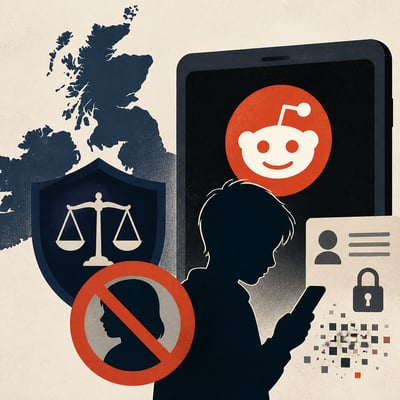
UK regulators and policymakers are tightening requirements for platforms and technology companies to identify younger users, restrict access to harmful content, and protect children's personal information. Reddit's £14.47 million ICO fine and subsequent European age-verification rollout illustrate the shift from self-declared ages toward stronger assurance methods, while proposed UK device controls would extend safeguards beyond individual platforms. The measures increase pressure on companies to prevent child exploitation while raising privacy questions about identity, biometric, and behavioral data collection.
Articles: 39
Last Updated: 07/06/2026
- 97
States Expand App Store Age Checks
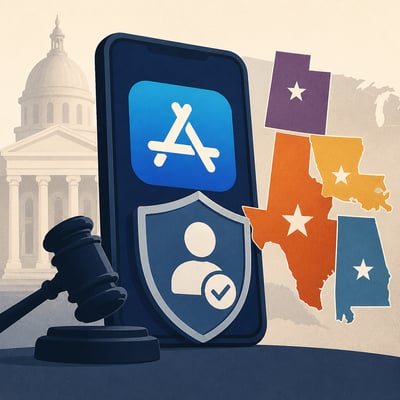
U.S. states are adopting app store accountability laws that require age verification, parental consent for minors, age ratings, and data exchange between app stores and developers. Texas enforcement is proceeding temporarily while constitutional litigation continues, while Utah, Louisiana, and Alabama are using related but materially different frameworks. The measures are creating operational uncertainty for Apple, Google, developers, and compliance teams because implementation costs, privacy obligations, enforcement authority, and legal durability remain unsettled.
Articles: 5
Last Updated: 07/08/2026
- 97
Roblox Child Safety Verification Settlements

State attorneys general are forcing Roblox to adopt stronger age checks, tighter chat controls, and reduced encryption for minors after child-safety lawsuits. The main tension is between child protection and the privacy costs of biometric verification and readable communications.
Articles: 6
Last Updated: 05/23/2026
- 96
Utah Targets Vpns In Age Verification
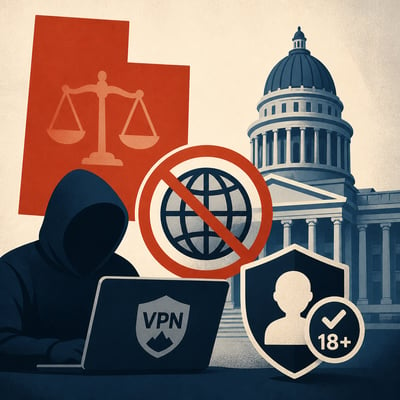
Utah Senate Bill 73 treats people physically in the state as Utah users for age-verification purposes even when they use VPNs or proxies, and restricts covered websites from facilitating circumvention. The measure has prompted warnings that websites may respond with broader VPN blocking or age checks for users outside Utah, while Aylo has sued to challenge the law’s reach and constitutionality. Its implementation is being tested against unresolved questions about VPN detection, privacy, and enforcement.
Articles: 4
Last Updated: 05/13/2026
- 95
Meta Removes Muse Image After Backlash

Meta launched Muse Image in July 2026 with a feature that allowed users to reference public Instagram accounts when generating or editing AI images. Reports said adult public-account users were included by default, were not directly notified when their photos were reused, and had to locate an opt-out setting; the feature was removed within days after criticism from privacy advocates and performer groups. The episode highlights continuing tension between Meta’s rapid AI product rollout and expectations for clear consent, notice, and control over publicly shared images and likenesses.
Articles: 25
Last Updated: 07/25/2026
- 94
California Right-To-Delete Bill Advances

California Senate Bill 1247 would give people who appeared in monetized online content as minors the ability to request deletion or editing of that material after turning 18. Authored by Senator Steve Padilla, the measure extends California’s recent protections for child content creators from earnings to control over their digital identities. The bill has advanced in the Senate but still faces Assembly consideration, implementation questions, and potential free-speech concerns.
Articles: 3
Last Updated: 05/20/2026
- 94
Age Assurance Privacy Guidelines

Australian privacy regulators are setting rules for age assurance systems with a strong emphasis on data minimisation, transparency, proportionality, and vendor oversight as online age checks expand under new eSafety requirements.
Articles: 3
Last Updated: 05/04/2026
- 92
Age Verification And Privacy Rules

Recent privacy coverage is dominated by age-verification rules for apps, websites, AI services, and even VPNs, with regulators pushing broader age assurance while privacy advocates warn about identity checks, data collection, and reduced anonymity.
Articles: 11
Last Updated: 07/20/2026
Secondary
- 93
Online Age Checks Raise Privacy Risks

Governments and platforms are advancing age checks and youth-safety restrictions for social media and online services, using methods that include government IDs, facial analysis, behavioral inference, and third-party verification. The measures are intended to limit minors' access to harmful or age-inappropriate experiences, but they also create risks involving sensitive-data breaches, surveillance, misclassification, exclusion, and circumvention. Privacy-preserving approaches such as tokenized age confirmation and zero-knowledge proofs are being tested, while policymakers and platforms continue to weigh them against enforcement and usability demands.
Articles: 25
Last Updated: 08/04/2026
- 83
Texas Targets Platforms Over Data Harvesting

Texas Attorney General Ken Paxton is pursuing privacy and deceptive-practices cases against Netflix and Temu, alleging that the companies harvest consumer data through tracking, app functionality, and misleading user practices. The Netflix case emphasizes viewing behavior, children's profiles, device information, location data, and alleged sharing with advertising and data-broker networks; the Temu case focuses on access to device data and alleged deceptive marketing. The cases illustrate Texas's broader use of state consumer-protection law to challenge data-collection practices, though the allegations remain contested and the litigation has not been resolved.
Articles: 4
Last Updated: 05/11/2026
- 83
Regulators Probe Grok Deepfake Harms

xAI and X are facing lawsuits, regulatory investigations, and public pressure over allegations that Grok generated or distributed non-consensual sexualized images of identifiable people, including claims involving minors. Authorities in the UK, EU, France, and other jurisdictions are examining privacy, data protection, platform-risk, and online-safety obligations, while xAI has described account enforcement and pursued at least one user in court. The central unresolved issue is how responsibility should be divided among users, platform operators, and AI developers when safeguards fail to prevent foreseeable misuse.
Articles: 23
Last Updated: 07/28/2026
- 78
Waymo Robotaxis Alert Police

Waymo robotaxis are drawing scrutiny after the company alerted San Mateo police about two teenage passengers and remotely moved the vehicle to a parking lot following reports of drinking and firing water beads. The incident highlights how onboard cameras, microphones and remote support can turn a driverless taxi into both a safety system and a source of evidence for law enforcement. A separate San Francisco burglary investigation raised additional questions about data retention after interior footage had been purged before police served a warrant.
Articles: 23
Last Updated: 07/14/2026
- 76
Apple Encryption And CSAM Lawsuits
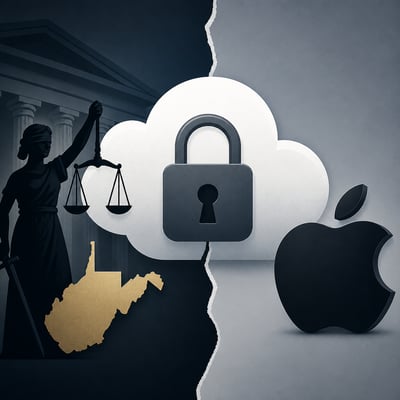
West Virginia has sued Apple over iCloud encryption and CSAM handling, arguing that privacy protections and Apple’s abandonment of server-side scanning weaken child-safety enforcement. The current signal is tightly focused, legally driven, and centered on the tension between encryption and reporting duties.
Articles: 4
Last Updated: 02/20/2026
- 76
AI Agent Breach And Toy Privacy

The topic centers on security, privacy, and safety failures linked to rapidly deployed AI systems. Hugging Face reported that an autonomous AI agent framework exploited code-execution paths in its data-processing pipeline, while separate reporting documented exposed children’s conversations and broader safety concerns involving AI-enabled toys. The developments highlight the need for stronger access controls, data minimization, product testing, incident response, and oversight of AI systems used in sensitive environments.
Articles: 9
Last Updated: 07/20/2026
- 71
Japan Eases Consent Rules For AI Training

Japan is advancing amendments to its personal data protection framework that would permit AI training on sufficiently pseudonymized sensitive information, including medical and other protected records, without obtaining individual consent. The changes are part of a broader effort to strengthen domestic AI capabilities and reduce dependence on foreign technology, but critics warn that supposedly anonymized datasets can be re-identified and that expanded use could increase breach and privacy risks. The reforms would also introduce stronger transparency requirements for biometric data and tighter protections for people under 16, subject to final legislative approval and implementing rules.
Articles: 3
Last Updated: 07/10/2026