
 AI Governance
 Data Centers
 Drones
 Climate
 Privacy
 2026 Maine Senate
 Bob Dylan
Dylan Archival Scholarship Wave
Coverage from The Guardian, The Dylan Review, and others
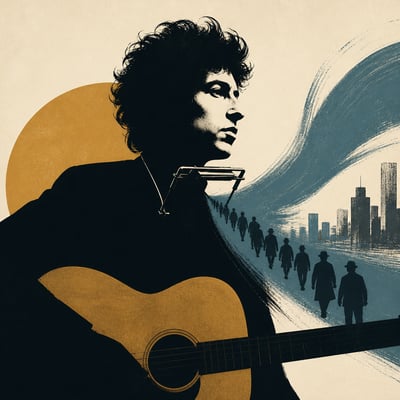
Recent writing on Bob Dylan is dominated by archival scholarship and close textual analysis.
A large Tulsa archive volume remains the main reference point, while newer criticism adds focused study of specific periods and lyrical sources.
The story narrows from a broad archival-and-scholarship pattern into a more explicit year-specific focus, with a new 1971 study adding micro-historical detail to the Dylan archive frame. The current version also slightly downshifts the signal by emphasizing that the corpus is still small and mostly review-driven.
No material change is evident between the previous and current versions; the framing, entities, and claims are unchanged. The story remains centered on archival Dylan scholarship and the same core reference points.
The story has narrowed into a more clearly archival-and-scholarship-centered Dylan frame, with the Bob Dylan Center and Mixing Up the Medicine becoming the dominant reference points. Compared with the previous version, live-performance and broader provenance debates are less prominent, while focused studies of specific years, lyrics, and influence chains now drive the interpretation.
The main shift is a reframing: the current version places even stronger emphasis on Dylan's work as an evolving set of texts and performances, with archival recovery and live variation now more central than before. It also adds Tony Attwood and slightly broadens the live-performance emphasis, but the underlying story remains stable and scholarly.
The story has broadened from general Dylan scholarship into a more specific emphasis on recent archival publishing and secondary-market interest, while keeping the same core focus on song evolution and authorship. The current version also adds a slightly wider scholarly cast and more explicit framing of the material as ongoing, academically mixed interpretation.
This material tracks Dylan through a mix of archival scholarship, song-by-song interpretation, and retrospective album analysis. The strongest current signal is sustained attention to how Dylan reshapes songs across time, while older essays supply historical grounding in his folk origins, early breakthroughs, and critical legacy.