
 AI Governance
 Data Centers
 Drones
 Climate
 Privacy
 2026 Maine Senate
 Bob Dylan
Amazon’s Drone Delivery Goes Suburban
Coverage from Fox News, Akron Beacon Journal, and others
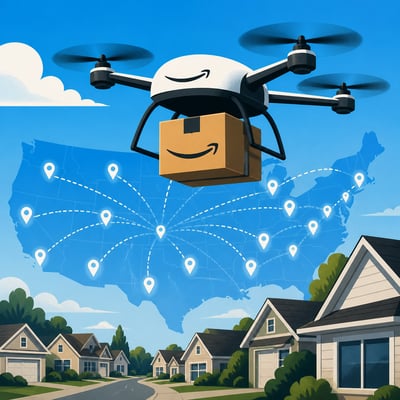
Amazon plans to expand Prime Air from 11 locations in 10 metropolitan markets to nearly 500 U.
S. cities and towns, mainly serving suburban areas with packages weighing up to five pounds. The program relies on FAA Part 135 certification, autonomous navigation, and detect-and-avoid systems to support deliveries that can arrive in roughly 30 minutes. The scale-up could make drone delivery more widely available, but execution depends on approvals, suitable drop zones, weather, noise and privacy management, safety performance, and sustainable delivery economics.
The core Amazon expansion plan is largely unchanged, but the current version adds Cleveland Clinic’s separate prescription-drone program and identifies the MK30 aircraft, broadening the healthcare and technology context.
The story gains operational detail rather than a fundamentally different direction: Phoenix pilot experience adds evidence of convenience alongside noise, downdraft, and package-placement constraints. The proposed network is also more specifically framed around fulfillment-center coverage, landlord approval, and potential community acceptance.
The story now places Prime Air within a broader competitive drone-delivery market, while emphasizing that autonomous reliability, local approvals, and airspace coordination—not just Amazon’s announced scale—will determine execution.
The story gains firsthand evidence from Phoenix that Prime Air is usable but faces noise, downdraft, and package-drop limitations.
The update adds an estimate that the expanded network could reach about 30 million customers, reinforcing the shift toward broad suburban deployment. Otherwise, it largely confirms the previously reported plan and its regulatory, operational, and economic constraints.
Amazon plans to expand Prime Air from 11 delivery sites in 10 U.S. metropolitan areas to nearly 500 cities and towns by the end of 2026. The service is designed to deliver eligible packages weighing up to five pounds in roughly 30 to 60 minutes, using autonomous navigation and Detect-and-Avoid systems under FAA Part 135 certification. The scale-up could make drone delivery a more routine suburban service, but its timetable depends on regulatory approvals, local acceptance, weather, operational safety, and the resolution of prior incidents.