
 AI Governance
 Data Centers
 Drones
 Climate
 Privacy
 Bob Dylan

Drones Quick Briefing
2026-11-07
Drone Adoption Advances, but Operational Constraints Remain Decisive
of Play
Military use continues to demonstrate the value of low-cost drones while faster threats test existing defenses. The most material new commercial signal is Zipline’s financing, which supports expansion but does not establish that planned sites or delivery volumes will be achieved. The central question remains whether investment and technical capability translate into sustained operations.
What's New?
Low-cost drones remain central to Ukraine’s battlefield
Ukraine’s mass-produced drones enable attacks on forces and infrastructure at relatively low cost. Maintaining that advantage depends on sustained production and adaptation, not aircraft purchases alone.

Drone defenses remain specific to the threat
Earlier reporting indicated that inexpensive Ukrainian interceptors could engage piston-engine Shaheds but were too slow for jet-powered variants. Current interception performance against either threat is not established by the available evidence.

Delivery expansion combines real operations with approval constraints
Drone delivery is operating at a growing retail footprint, but expansion still depends on aviation authorization and local site access. Local pushback against Amazon illustrates a constraint, not a demonstrated sector-wide slowdown.

What's Changed?
Zipline gains substantial capital for expansion
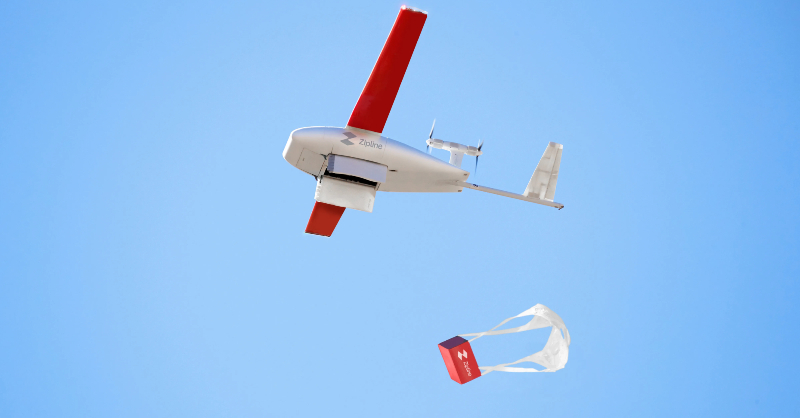
New reporting says Zipline raised $1.5 billion at a $21.5 billion valuation and plans to expand U.S. manufacturing and hiring. Walmart and Zipline are evaluating 300 additional sites; those sites are not yet operational commitments.
What Matters?
Capital strengthens expansion prospects, not proof of scale
The Zipline financing strengthens the prospect of a larger delivery network without resolving the prior assessment’s bottlenecks: approvals, local acceptance and sustained operations. Investment and proposed sites should not be treated as delivered capacity.
Interceptor success does not automatically transfer to faster threats
The contrast between piston and jet-powered drones reinforces the existing assessment that defensive effectiveness is conditional on the target. Faster threats can erode an inexpensive defense’s usefulness unless interceptors and their deployment adapt.

What's Next?
Track delivery approvals and operational openings
Watch whether evaluated Walmart sites secure approvals and begin sustained service, and whether proposed FAA beyond-visual-line-of-sight rules change expansion conditions. Openings and delivery volumes would be stronger evidence of scale than targets or financing.
Test whether faster interceptors close the defense gap
The existing watchpoint remains unresolved: look for operational interception results and costs against jet-powered drones. Demonstrated effectiveness at sustainable cost would strengthen confidence that inexpensive defenses can adapt; persistent failures would indicate a more durable gap.