
 AI Governance
 Data Centers
 Drones
 Climate
 Privacy
 2026 Maine Senate
 Bob Dylan
Last Update: 09/17/2026 at 11:34 PM EST
Who Pays for Data Center Power?
Coverage from Yahoo Tech, AOL, and others
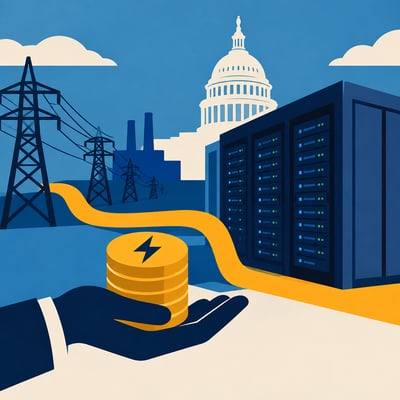
The House passed the bipartisan Ratepayer Protection Act by a 417-3 vote, advancing standards under which data centers and other computational loads above 100 megawatts could be required to cover incremental generation, transmission, and distribution costs.
The measure stalled in the Senate after Sen. Martin Heinrich objected that its voluntary approach was too weak and proposed mandatory payments for large grid customers. The debate could affect electricity rates, project timelines, financial guarantees, and the way utilities connect large data centers, but implementation would remain largely with state regulators even if Congress ultimately acts.
Looking Back
8 Day Timeline
Sep 10
Sep 11
Sep 12
Sep 14
Sep 15
Sep 16
Sep 17
All Articles27 articles
Interesting
The U.S. House passed the Ratepayer Protection Act on a 417-3 vote in Washington, directing state regulators to consider assigning data center grid costs to operators.
9/16/2026 • Community & Local Opposition • General
The U.S. House of Representatives passed the Ratepayer Protection Act, which would require data center operators to fund electricity infrastructure upgrades and could encourage behind-the-meter generation.
9/17/2026 • Policy & Utility Planning • General
The U.S. Senate blocked Jon Husted's Ratepayer Protection Act during a work period after Martin Heinrich objected, leaving data center grid cost rules unresolved.
9/17/2026 • Policy & Utility Planning • General
Additional
Senate lawmakers stalled a House-passed bill Thursday in Washington that would have states consider requiring large data centers to finance grid upgrades.
9/17/2026 • Policy & Utility Planning • General
The U.S. House passed the Ratepayer Protection Act to require large data-center developers in the United States to fund incremental generation, transmission, and distribution upgrades.
9/17/2026 • Policy & Utility Planning • General
The U.S. House passed the Ratepayer Protection Act in Washington by a 417-3 vote, requiring large computational loads to address incremental grid and generation costs.
9/17/2026 • Policy & Utility Planning • General
The U.S. House passed the Ratepayer Protection Act on a 417-3 vote, sending the data-center cost-allocation bill to the Senate amid nationwide ratepayer concerns.
9/16/2026 • Policy & Utility Planning • General
The U.S. House approved legislation in Washington requiring regulators to consider full data-center infrastructure cost allocation, while Arkansas lawmakers examined Entergy's Google project in West Memphis.
9/17/2026 • Power Procurement & Grid • General
The U.S. House and Senate are considering bipartisan legislation in 2025 to prevent expanding AI data centers from shifting electricity costs onto households and small businesses, with Ohio central to the debate.
9/15/2026 • Power Procurement & Grid • General
House Republican lawmakers, led by Speaker Mike Johnson's office, plan to hold a vote in Washington the following week on legislation addressing household electricity costs linked to data center expansion.
9/11/2026 • Policy & Utility Planning • General
House lawmakers are preparing to vote next week in Washington on the Ratepayer Protection Act, which would require data centers to cover incremental grid upgrade costs.
9/11/2026 • Policy & Utility Planning • General
The Senate blocked Jon Husted's Ratepayer Protection Act in Washington, D.C., delaying legislation that would require large AI data centers to fund added grid infrastructure before the election.
9/17/2026 • Policy & Utility Planning • General
In Washington on Thursday, Senate action on the Ratepayer Protection Act stalled after Martin Heinrich opposed Husted's bill and Bernie Moreno blocked Heinrich's alternative.
9/17/2026 • Policy & Utility Planning • General
Senator Martin Heinrich blocked Senate approval in Washington on Thursday of the House-passed Ratepayer Protection Act, citing insufficient safeguards against data center electricity, water, and pollution costs.
9/17/2026 • Policy & Utility Planning • General
The U.S. House passed bipartisan legislation on Wednesday in Washington encouraging state regulators to make data centers cover higher electricity costs linked to their power demand.
9/16/2026 • Policy & Utility Planning • General
The U.S. House approved a bill Wednesday in Washington requiring consideration of rates that make AI data centers cover new power and transmission costs.
9/16/2026 • Policy & Utility Planning • General
The U.S. House approved legislation Wednesday in Washington recommending that state regulators make AI data centers pay for new electricity and transmission infrastructure.
9/16/2026 • Policy & Utility Planning • General
The U.S. House passed the Ratepayer Protection Act in Washington on Wednesday, directing state regulators to make large data center customers pay for new electricity infrastructure.
9/16/2026 • Policy & Utility Planning • General
The U.S. House passed H.R. 9340 in Washington, D.C., requiring state regulators to make data centers pay for generation and grid upgrades serving large-load customers.
9/16/2026 • Policy & Utility Planning • General
The U.S. House is expected to vote on the Ratepayer Protection Act, which would allow state regulators to make large AI data centers pay for related power infrastructure nationwide.
9/15/2026 • Policy & Utility Planning • General
The U.S. House passed a bipartisan bill Wednesday in Washington requiring data center companies to fund generation and grid upgrades serving new facilities.
9/17/2026 • Policy & Utility Planning • General
House Republican leaders plan to advance the bipartisan Ratepayer Protection Act in Washington next week to address how data center demand affects electricity costs.
9/10/2026 • Policy & Utility Planning • General
The U.S. House passed a bipartisan data center energy-cost bill on a 417-3 vote, urging state regulators nationwide to protect ratepayers as AI infrastructure expands.
9/16/2026 • Policy & Utility Planning • General
The U.S. House on Wednesday approved legislation urging state utility regulators to make AI data centers cover new power and transmission costs nationwide.
9/16/2026 • Policy & Utility Planning • General
The U.S. House approved a bill in Washington requiring state regulators to consider assigning AI data centers the full cost of new power and transmission infrastructure.
9/16/2026 • Policy & Utility Planning • General
The U.S. House passed H.R. 9340 on Wednesday in Washington, directing state utility commissions to review rates for data centers exceeding 100 megawatts.
9/16/2026 • Policy & Utility Planning • General
The U.S. House passed the Ratepayer Protection Act overnight in Washington, directing regulators to consider making AI data centers pay for power and transmission upgrades.
9/17/2026 • Policy & Utility Planning • General