
 AI Governance
 Data Centers
 Drones
 Climate
 Privacy
 2026 Maine Senate
 Bob Dylan
Data Center Growth Meets Local Limits
Coverage from Las Vegas Review-Journal, LavX News, and others
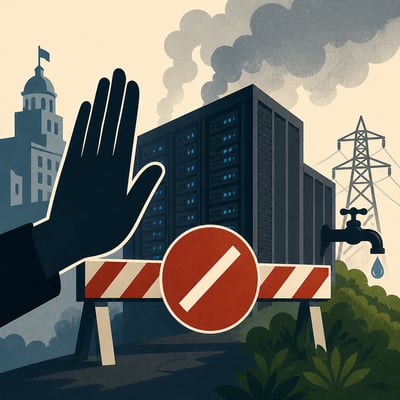
Across the United States, states, cities, and counties are pausing or limiting data center projects while they assess electricity demand, water use, environmental effects, infrastructure costs, and local benefits.
New York has become a prominent test case through a one-year pause on environmental reviews for hyperscale facilities, while communities from California to Michigan and Oklahoma have adopted bans, moratoriums, or tighter zoning rules. The shift is also reaching tax incentives and grid access, increasing uncertainty for developers even as most planned capacity remains on track.
The story now emphasizes that restrictions have not broadly derailed the data center buildout: one estimate puts meaningfully delayed capacity at only 2.3 GW. At the same time, grid-connection scrutiny is emerging as a distinct constraint, encouraging behind-the-meter power generation.
The update adds more concrete implementation detail: New York’s review pause may last up to a year, while some local measures are becoming permanent or lasting multiple years. The framing also shifts toward permitting uncertainty and possible project relocation, beyond infrastructure-cost disputes.
The story has shifted from general local resistance to a more consequential focus on grid access, cost allocation, and public subsidy scrutiny. Texas interconnection audits, PJM capacity-cost pressures, and conditional developer commitments indicate that utilities and governments are moving from debate toward implementation.
- Texas is auditing approximately 1,800 data-center interconnection projects.
- PJM capacity costs are increasingly tied to data-center demand.
- Tax incentives are being questioned where employment and fiscal returns appear modest.
- New York paused environmental reviews for hyperscale facilities above 50 megawatts.
- Developers and utilities are offering funded upgrades, storage, closed-loop cooling, and negotiated agreements.
The story is largely confirmed, but the framing now emphasizes fragmented local rules and more concrete permitting delays, with temporary measures lasting months to a year or longer.
The current version largely confirms the existing trajectory, while placing greater emphasis on cost allocation, infrastructure funding, efficiency standards, and possible incentive changes. Coverage also extends through September 2026, but no major new action or outcome is introduced.
The update adds a counterexample to the restriction wave, with Maine’s proposed ban vetoed, while more explicitly identifying FERC-led grid changes and Texas as a potential destination for redirected investment.
The story now includes concrete implementation outcomes, including Monterey Park’s permanent ban and federal direction to regional grids, making the regulatory response more tangible than a broad trend toward tighter rules.
The update adds more concrete evidence that regulatory scrutiny is becoming operational: New York formally paused certain hyperscale reviews and is developing a permitting framework, while litigation has canceled some projects. The broader conclusion remains fragmented regulation rather than a nationwide halt.
The story has shifted from primarily local permitting resistance to a broader infrastructure-allocation problem, with grid access, transmission, interconnection queues, and financing now central constraints on data center expansion.
The story now places greater emphasis on public trust and transparency, with opposition extending beyond project impacts to nondisclosure agreements and limited community input. Federal grid oversight and corporate community-engagement efforts also enter the picture.
The story now emphasizes a broader, more formal policy shift: restrictions are increasingly tied to expanded environmental review, utility reforms, and community-benefit conditions rather than just temporary pauses. It also adds a stronger implication that these measures may delay or redirect projects rather than reduce overall demand.
The story has shifted from a broad wave of local restrictions to a more specific regulatory response, led by New York’s one-year review pause and broader permitting overhaul. The update also adds federal and state-level actors shaping how utilities, water, and permitting costs will be allocated.
- New York is developing a broader review and permitting framework.
- Edgewater, Florida advanced a ballot measure covering hyperscale, AI, and cryptocurrency facilities.
- FERC is now part of the story through grid-connection processes.
- Janet Mills vetoed a proposed Maine ban above 20 megawatts.
The story has become more concrete and more nationwide: New York’s pause is now framed as an executive-order-driven statewide test case, while local bans and moratoriums are spreading to additional jurisdictions and possible voter actions. The policy debate is also shifting from broad opposition to more specific conditions like separate rate classes, infrastructure funding, and community benefits.
- New York paused hyperscale environmental reviews above 50 megawatts for up to one year.
- Monterey Park enacted a permanent data center ban.
- Governor Janet Mills vetoed a Maine restriction above 20 megawatts.
- FERC directed grid operators to justify large-load connection processes.
- Analysts say local bans may shift projects without fixing regional costs.
The story has sharpened from broad opposition and moratoriums into a more formal regulatory framework for hyperscale data centers, with New York leading a permitting pause and new standards effort. It now also emphasizes utility cost allocation, environmental review, and developer behavior as projects face delays, litigation, and outright rejection.
- New York has paused or restricted hyperscale environmental permitting.
- Utilities are pursuing special tariffs and on-site generation requirements.
- Developer-funded grid or water infrastructure is becoming a common condition.
- QTS abandoned a Northern Virginia project after litigation and resident opposition.
- Some localized utility areas have seen higher retail electricity prices.
The story shifts from a mostly local/state backlash against data centers to a more explicitly policy-driven campaign for slower approvals, clearer rules, and community-benefit protections. It also adds stronger evidence that the debate is broadening politically, with polling and bipartisan coalitions suggesting this is no longer a simple partisan issue.
The story has shifted from a broad wave of local resistance to a more concrete policy fight over how data centers are priced and approved, with new state-level actions and sharper estimates of local electricity cost impacts. The latest version also more explicitly frames economic benefits as slower and more concentrated in metro areas, increasing pressure for disclosure and cost-allocation rules before projects advance.
- Maine's proposed statewide pause was vetoed.
- Massachusetts paused data center tax-incentive applications.
- Texas moved to require projects to fund electric infrastructure.
- Some local utility areas may see electricity prices rise about 5%.
- Economic gains are stronger in metropolitan than rural counties.
The story has broadened from a general wave of local resistance into a more concrete policy fight over who pays for data center infrastructure, with specific city bans and state-level rules now articulated. The focus is also shifting from permitting friction alone to disclosure, utility-cost allocation, and the economic tradeoffs of redevelopment versus community burdens.
- More than 100 proposed moratoriums or bans have emerged nationwide.
- Monterey Park adopted a ballot-measure ban on data centers.
- Texas ordered operators to fund electric infrastructure for their facilities.
- Officials are now debating disclosure requirements and who pays for upgrades.
- Some restrictions face lawsuits or exemptions, and permitted projects may continue.
The story broadened from general local and state resistance to data centers into a more detailed, nationwide regulatory conflict that now includes specific legislative actions, federal permitting changes, and named companies. It also adds a clearer split between tighter siting controls and arguments for structured approvals or economic upside.
- Clean Water Act permitting appears narrower and faster for some projects.
- Monterey Park is described as the first U.S. city to ban new data centers locally.
- New York passed a one-year hyperscale data center moratorium.
- Michigan bills would pause construction of new data centers through April 2027.
- Amazon, OpenAI, and Oracle now appear in permitting and opposition examples.
The story broadened from a general wave of city and state resistance into a more explicit pattern of active, ongoing regulatory tightening across local governments. The update also adds several new jurisdictions and named officials, showing the pushback is spreading and becoming more structured.
The story has broadened from a wave of mostly temporary moratoriums into a denser push for more durable restrictions and stricter permitting rules. The new emphasis is on how public opposition and disclosure demands are shaping outcomes, alongside state-level frameworks that mirror local restrictions.
Cities, counties, and several state legislatures are moving to pause or ban new data centers, especially large hyperscale facilities. The debate is being driven by concerns over electricity demand, water use, noise, local infrastructure, and the speed of AI-related buildout. New York is the closest to enacting a statewide pause, while many local governments have already adopted temporary moratoriums or outright bans.