
 AI Governance
 Data Centers
 Drones
 Climate
 Privacy
 2026 Maine Senate
 Bob Dylan
Orbital Data Centers Face Scale Barriers
Coverage from Space Daily, IEEE Spectrum, and others
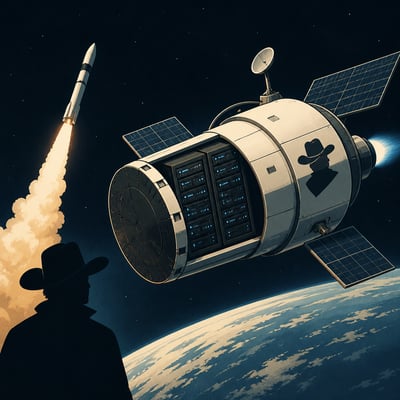
Companies and technology leaders are proposing low-Earth-orbit data centers to supply AI computing without relying on terrestrial land, water, grid connections, or permitting.
Demonstrations, new funding, and constellation proposals indicate growing commercial interest, but large-scale deployment remains constrained by launch volume and cost, heat rejection, radiation, communications latency, maintenance, and collision management. Current evidence points more toward specialized space workloads and selected inference tasks than a near-term replacement for terrestrial AI facilities.
The story has become broader and more formalized, with Google and Blue Origin projects, additional entrants, and FCC constellation filings moving orbital compute beyond isolated demonstrations and proposals. These developments strengthen evidence of an active development pipeline but do not establish commercial-scale viability.
The story now includes more concrete execution signals and updated timelines, especially Cowboy Space's funded orbital compute plan and SpaceX's much larger AI1 constellation concept. It also shifts from broad feasibility questions to a sharper emphasis on collision management and the operational limits of scaling orbital AI infrastructure.