
 AI Governance
 Data Centers
 Drones
 Climate
 Privacy
 2026 Maine Senate
 Bob Dylan
NextEra Dominion Deal Targets AI Power
Coverage from The Piedmont Environmental Council, WSJ, and others
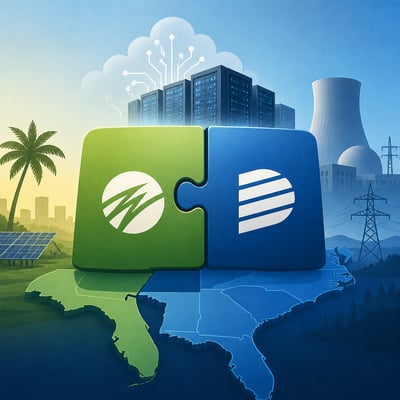
NextEra Energy’s proposed roughly $67 billion stock acquisition of Dominion Energy would combine major utility and generation portfolios across the Southeast and Mid-Atlantic, including Dominion’s large customer base in Northern Virginia.
The companies are positioning the transaction as a way to finance and deliver generation, transmission and related power projects for rapidly growing AI data center demand. The deal remains subject to shareholder, antitrust and other regulatory approvals, while concerns over construction costs and potential rate increases could shape its path to completion.
The story is broadly unchanged, but the current version sharpens the deal’s framing around AI data centers and adds a stronger regulatory overhang. It also slightly updates the transaction timing language and broadens the set of approvals and political pressures highlighted.
The story has moved from a planned merger to a signed, quantified transaction with clearer scope and approval risk. The current version adds named hyperscale customers, a much larger contracted load and construction backlog, and explicit regulatory challenge points around rates.
- NextEra and Dominion have agreed to an all-stock transaction.
- The deal is valued at roughly $66.8 billion to $67 billion.
- Dominion reports nearly 51 gigawatts of contracted data center capacity.
- Named customers include Alphabet, Amazon, Microsoft, and Meta.
- The combined company has about 130 gigawatts of construction backlog.
The story has broadened from a straightforward mega-merger tied to AI demand into a more specific infrastructure and siting debate. The new emphasis is on how the combined utility would build and recover costs for transmission, generation, and other large projects, especially in Virginia and the PJM region.
NextEra Energy and Dominion Energy have agreed to a roughly $67 billion all-stock merger that would create a much larger regulated utility spanning Florida, Virginia, the Carolinas, and other markets. The deal is explicitly framed around accelerating electricity demand from AI data centers and other large-load customers, while also promising scale, faster project delivery, and consumer credits. Regulators will scrutinize the transaction for impacts on rates, market concentration, grid reliability, and nuclear oversight.