
 AI Governance
 Data Centers
 Drones
 Climate
 Privacy
 2026 Maine Senate
 Bob Dylan

DTE Power for Michigan Data Centers
Coverage from Planet Detroit, Bridge Michigan, and others
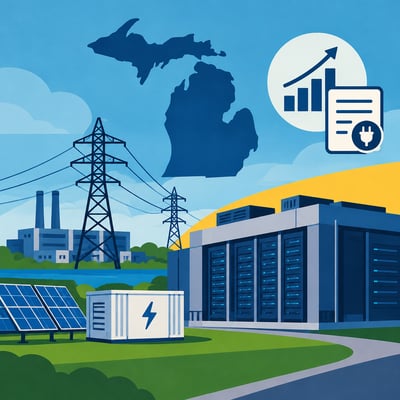
DTE Energy’s service to Michigan data centers links long-term electricity contracts with decisions about capacity, grid investment, and the mix of resources used to supply large facilities.
Google’s Project Cannoli in Van Buren Township illustrates these arrangements: its 20-year contract includes minimum-use payments, while Google is to fund renewable generation and battery storage. Michigan regulators have also required safeguards intended to keep data-center costs from shifting to other DTE customers. The broader subject includes how DTE plans for rising demand, maintains reliable supply, and allocates the costs of new resources.
If you read one thing
It clearly introduces the approved Google power agreements, their clean-energy commitments, and safeguards against shifting costs to other DTE customers.
Best explainer
It broadens the picture to DTE’s projected data-center load and the related generation-investment and energy-source debate.
Long-term contracts with protections against cost shifting
Google’s 20-year DTE agreement sets minimum-use payments and significant obligations for early exit. Regulators require safeguards against shifting project costs to other customers, while reporting also records concerns about exposure if actual use falls short.
Clean-energy commitments amid broader capacity planning
The Google load is paired with customer-funded renewable generation and battery storage, while DTE’s broader resource plan includes proposed gas plants and other generation. DTE reports further prospective data-center demand, but whether specific investments are driven by those projects remains disputed.
Google’s gigawatt-scale project advances toward service
Project Cannoli has received final Van Buren Township site-plan approval alongside approved DTE power arrangements. The planned 1-GW facility is expected to begin service in late 2027 and reach maximum load in 2028.
2.4 gigawatts
capacity of DTE’s two approved data center commitments
“Environmental groups worry that data center demand could drive fossil-fuel investment and shift costs to other ratepayers. Sierra Club organizer Bryan Smigielski noted that DTE’s two approved data center commitments total 2.4 gigawatts, while the proposed gas plants together would generate 2.1 gigawatts.”
5-1
Planning Commission vote on the final site plan
“The Van Buren Township Planning Commission voted 5-1 after public comment.”
5-1
Planning Commission vote tally
“The Van Buren Township Planning Commission voted 5-1 after public comment, completing a local approval process that began last year.”
1-gigawatt
data center capacity
“Van Buren Township’s Planning Commission approved final site plans for Google’s 1-gigawatt data center and an accompanying electrical substation on 282 acres north of I-94, east of Haggerty Road, west of Hannan Road and south of Wayne County Community College.”
2.1 gigawatts
combined generation capacity of the proposed gas plants
“Environmental groups worry that data center demand could drive fossil-fuel investment and shift costs to other ratepayers. Sierra Club organizer Bryan Smigielski noted that DTE’s two approved data center commitments total 2.4 gigawatts, while the proposed gas plants together would generate 2.1 gigawatts.”
No material change since the prior state: the new articles repeat Project Cannoli’s site-plan approval and the previously established DTE power-contract terms; added water and environmental details do not alter the Topic’s electricity-supply picture.
Previously
Michigan regulators approved long-term DTE power agreements for Google's proposed one-gigawatt Van Buren Township data center, with minimum-payment and cost-protection requirements. The project also ties new demand to renewable energy and battery storage. DTE reports further data-center power requests as its proposed generation expansion raises questions about reliability, emissions, and who pays for new capacity.
Van Buren Township approved Project Cannoli’s final site plan, advancing the project locally. New details also sharpen scrutiny of its resource and environmental footprint, including projected water use of up to 3.6 million gallons daily.