
 AI Governance
 Data Centers
 Drones
 Climate
 Privacy
 2026 Maine Senate
 Bob Dylan
Cape Town Data Center Faces Resource Scrutiny
Coverage from Broadband Breakfast, Courthouse News, and others
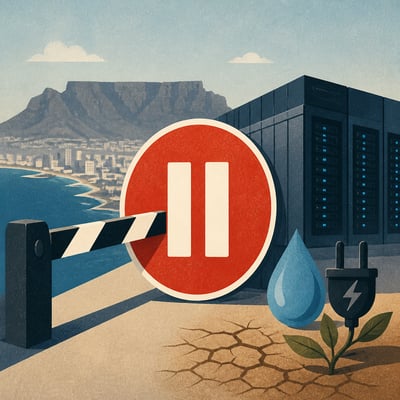
South African civil society groups are calling for a temporary pause on additional data center approvals and construction while authorities examine resource use and community effects.
The debate centers on an approved Equinix hyperscale facility in Cape Town, estimated to require 160 megawatts, amid scrutiny of water availability, past power cuts, land use, infrastructure, and environmental transparency. Operators and industry representatives point to improved electricity conditions, renewable power, and water-saving technologies, leaving the facility’s wider resource impact and the scope of any pause unresolved.
Resource disclosure is the central governance gap
The dispute centers on whether data-center operators must provide consistent, binding information about electricity, water, land, infrastructure, environmental effects, and community impacts. More than 250 submissions to the Human Rights Commission show that transparency and rule-setting are active institutional concerns.
Data-center resource compatibility remains contested
The approved Equinix Cape Town facility, estimated to require 160 megawatts, is a focal point for concerns about electricity and water availability in a country marked by past power cuts and Cape Town's water crisis. Industry representatives dispute that data centers worsen scarcity and cite renewable power and water-saving technologies, leaving the net resource impact unresolved.
Civil society is pressing for a precautionary approval pause
Civil rights groups are seeking a temporary halt to additional data-center approvals or construction until resource use and community effects are investigated. Supporters frame the pause as a way to establish clearer rules and reduce uncertainty, while its scope and implementation remain unresolved.
160 megawatts
estimated electricity requirement of the Equinix hyperscale facility
“The facility is estimated to require 160 megawatts of electricity, raising concerns in a country that experienced widespread power cuts, known as load-shedding.”
more than 250 submissions
submissions received by the South African Human Rights Commission
“The South African Human Rights Commission said it received more than 250 submissions from interested groups after requesting input in May.”
No material change is evidenced since the previous state; the Topic remains centered on civil society scrutiny of Cape Town data center expansion and unresolved concerns about resource use, infrastructure, and community effects.
Previously
South African civil society groups are calling for a temporary pause on additional data center approvals and construction while authorities examine resource use and community effects. The debate centers on an approved Equinix hyperscale facility in Cape Town, estimated to require 160 megawatts, amid scrutiny of water availability, past power cuts, land use, infrastructure, and environmental transparency. Operators and industry representatives point to improved electricity conditions, renewable power, and water-saving technologies, leaving the facility’s wider resource impact and the scope of any pause unresolved.