
 AI Governance
 Data Centers
 Drones
 Climate
 Privacy
 Bob Dylan

Data Centers: Featured Story
Coverage from Aol and others
Nvidia Shares Slide Amid AI Spending and CEO Concerns
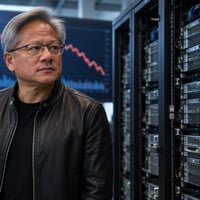
Nvidia shares fell roughly 30% from their October peak as investors reassessed the pace and returns of AI infrastructure spending and reacted to reports of CEO Jensen Huang’s departure. The company’s latest reported results remained strong, with fiscal second-quarter revenue of $96.2 billion and data-center revenue of $89 billion, while its outlook called for about $108 billion in third-quarter revenue. Investors are weighing that growth against leadership uncertainty, possible shifts in customer spending, competition, and Nvidia’s lower share valuation.
If you read one thing
A broad overview pairing Nvidia’s latest results and revenue outlook with leadership uncertainty, spending risks, competition, and valuation.
The evidence
Adds detail on investor concerns about returns from AI infrastructure spending, possible regulatory and project-timing pressures, and Nvidia’s competitive position.
Coverage establishes strong recent results and guidance, but leaves future demand, leadership and the durability of growth uncertain. The share-price decline reflects those risks; it does not establish that AI spending has collapsed or that Nvidia's outlook will weaken.
Nvidia reported fiscal second-quarter revenue of $96.2 billion and data-center revenue of $89 billion, both sharply higher year over year; its third-quarter revenue guidance was about $108 billion.
Investors are questioning whether data-center developers and major cloud companies will sustain AI infrastructure spending and earn sufficient returns. Coverage cites funding pressures and changes or delays in some companies' capital-spending plans, but does not establish a broad collapse in demand.
Reports of Huang's departure have added leadership uncertainty. Coverage says CFO Colette Kress is serving as interim CEO while a permanent replacement is sought; one article reports that the board investigation had not established that company secrets were compromised.
Nvidia's valuation has contracted alongside its shares, while its competitive position remains contested: coverage points to its software and hardware ecosystem as an advantage, and to rival accelerators and customers' custom chips as potential risks. Whether earnings growth will justify the valuation depends on future demand and competition.
Articles in this story are part of a shaping these topics.