
 AI Governance
 Data Centers
 Drones
 Climate
 Privacy
 2026 Maine Senate
 Bob Dylan
Last Update: 09/29/2026 at 5:33 PM EST
Western Snowpack And Megadrought Stress
Coverage from The New York Times, The Guardian, and others
Overview
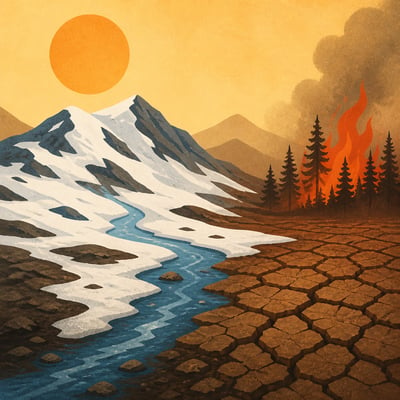
Western North America is in a severe low-snow, high-warmth pattern that is reducing runoff, raising wildfire risk, and stressing water systems, while parallel studies show similar mountain water losses and instability in the Himalayas.
Summary
- Western U.S. snow drought conditions are unusually severe, with many basins far below seasonal averages and some among the lowest levels in decades.
- Warm winter temperatures are shifting precipitation from snow to rain, reducing snowpack storage and weakening spring and summer runoff.
- Low snowpack is repeatedly tied to higher wildfire risk because dry fuels arrive earlier and fire seasons can start sooner.
- Water impacts remain central: reservoirs, Colorado River flows, hydropower, groundwater recharge, and municipal supply all depend on snowpack health.
- Mountain climate risks are not limited to the U.S. West; Himalayan snowfall decline, glacier retreat, and river instability show a broader high-elevation signal.
- Adaptation responses are emerging through monitoring, forecasting, fuel management, and workshop-level coordination, but they do not remove the underlying warming-driven pressure.
- The topic is coherent and structurally stable: multiple sources reinforce the same snow-loss, drought, and downstream water-security pattern.
This Topic Has Been Archived
This topic has been split into multiple separate topics.
Visit the main Topics page to see what's now available.