
 AI Governance
 Data Centers
 Drones
 Climate
 Privacy
 2026 Maine Senate
 Bob Dylan
Waste Heat Feeds District Heating
Coverage from Enlit World, Michigan Public, and others
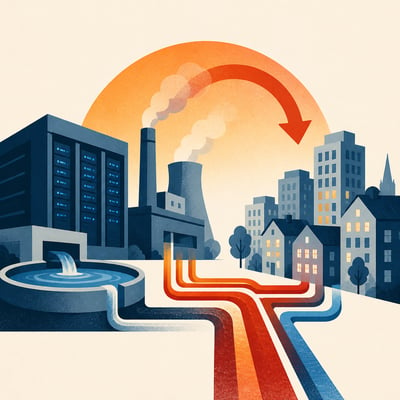
Cities, utilities, and data-center developers are exploring thermal networks that capture waste heat from servers, wastewater, and other energy facilities to heat and cool multiple buildings.
Heat pumps and ambient water loops can link these sources with district energy systems, potentially reducing natural-gas use, cooling waste, and pressure on electricity infrastructure. Projects in Finland, Denver, Lansing, St. Paul, Toronto, and the UK show growing interest, but financing, permitting, utility access, public acceptance, and the clean-energy status of some power sources remain unresolved.
The story now centers more clearly on specific implementation details and constraints, especially the Kajaani heat-recovery buildout and Lansing’s fuel-cell emissions caveat. It also broadens the framing from data-center heat reuse to a wider thermal-network story that includes thermal storage concepts and tighter emphasis on emissions accounting and local demand.
The story broadens from a few Great Lakes and European waste-heat examples into a wider set of city-led and utility-led thermal network proposals, adding Denver and clarifying that data-center heat recovery is being designed into urban energy systems. The new version also sharpens the barriers and tradeoffs, especially weak North American policy support, siting limits, and contested climate benefits for some projects.