
 AI Governance
 Data Centers
 Drones
 Climate
 Privacy
 2026 Maine Senate
 Bob Dylan
Waste Bread Enables Carbon-Negative Hydrogenation
Coverage from Anthropocene Magazine, Nature, and others
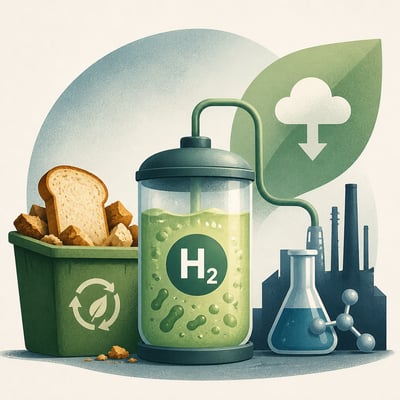
Researchers at the University of Edinburgh have demonstrated a hydrogenation process in which E.
coli fed with sugars from waste bread produces hydrogen under oxygen-free conditions. With a palladium catalyst, the microbial hydrogen can drive chemical reactions at near-room temperature without fossil-derived or externally supplied hydrogen. Lifecycle modeling indicates the approach could be carbon-negative when it both avoids fossil hydrogen and diverts food waste from landfill or incineration, but broader industrial use remains to be demonstrated.
The story has become more concrete: the microbial hydrogenation pathway is now tied to a specific University of Edinburgh E. coli system and a published one-pot process, rather than just converging research reports. The main substantive update is confirmation that the approach can generate hydrogen and drive hydrogenation under oxygen-free, near-room-temperature conditions, while remaining early-stage and unproven at industrial scale.
The story has shifted from a narrow proof-of-concept about microbial hydrogen from waste bread to a more explicitly framed industrial chemistry pathway for hydrogenation. The biggest new element is stronger emphasis on broad manufacturing applications and carbon-negative lifecycle scenarios, while the underlying research remains at the same early-stage level.