
 AI Governance
 Data Centers
 Drones
 Climate
 Privacy
 2026 Maine Senate
 Bob Dylan
Washington Balances Flood Control and Salmon
Coverage from NPR, The New York Times, and others
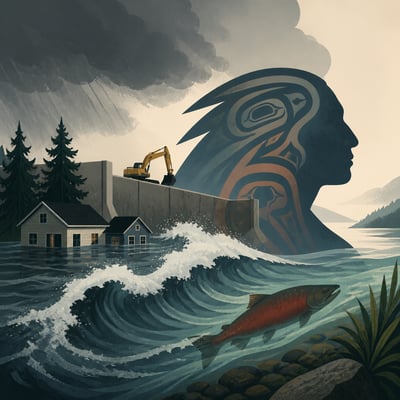
Washington communities and Tribes are pursuing different responses to worsening flood and coastal hazards, including levee removal, wetland restoration, floodplain planning, and proposals to dredge the Nooksack River.
These efforts aim to protect homes, farms, infrastructure, cultural resources, and threatened Chinook salmon, but they also create tensions over downstream impacts, agricultural land, permitting, and tribal fishing and water rights. The emerging direction favors locally tailored projects that restore natural river and coastal processes while retaining targeted protective structures.
The story now places much greater emphasis on concrete implementation in the Stillaguamish basin and on the specific Nooksack dredging dispute. It also sharpens the framing around farmland, permitting, and tribal rights as the key constraints on flood adaptation.
The story has shifted from general Washington flood adaptation to more acute, place-specific conflict and action: record flooding is now pushing faster flood-relief measures, while Stillaguamish restoration and Nooksack dredging disputes have become more explicit. The broader coastal resilience effort is also clearer, with COHORT’s 19-Tribe partnership and the practical permitting/funding constraints now foregrounded.