
 AI Governance
 Data Centers
 Drones
 Climate
 Privacy
 2026 Maine Senate
 Bob Dylan
Warming Waters Reshape Whale Survival
Coverage from Yale E360, Inside Climate News, and others
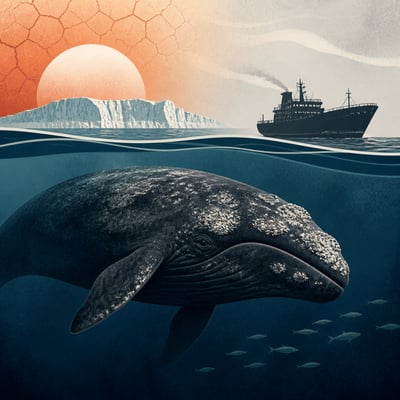
Warming oceans, shrinking sea ice, and shifting prey are placing additional pressure on whale populations from the North Pacific to the Southern Ocean.
Eastern North Pacific gray whales are experiencing sustained population and reproductive declines linked to food scarcity, while vessel traffic, fishing gear, and other human activities compound risks for several species. Research into whale-detection systems, krill management, and dietary flexibility offers possible responses, but the evidence does not yet show that technology or adaptation can offset accelerating environmental change.
The update sharpens the gray-whale story from broad climate stress to a more specific, sustained decline in Eastern North Pacific gray whales, now tied to prolonged food scarcity, low reproduction, and unusually high strandings. It also slightly widens the geographic and ecological framing, but the core policy implications remain the same: vessel risk, krill pressure, and monitoring limits persist, with no proven technological substitute yet.
The story broadens from a gray-whale-centered climate mortality narrative into a wider multi-species conservation picture that adds Southern Ocean krill management and new evidence that some whales may have dietary flexibility. It also sharpens the urgency around Pacific gray whales by tying poor Arctic feeding conditions to sharp population decline, reduced calf production, and higher mortality.