Ecosystem Carbon-Cycle FeedbacksEcosystem Carbon-Cycle FeedbacksCoverage from EDF Climate 411, CBC News, and others
00/00/0000
DailyWeekly
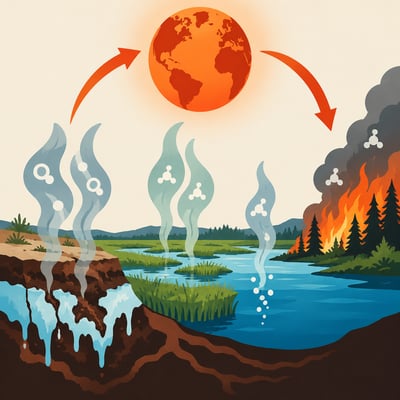
As temperatures rise, thawing permafrost can expose stored carbon, while wetlands and inland waters can release more methane and wildfires can emit carbon from ecosystems.
Together, these processes create reinforcing feedbacks: warming prompts emissions that can contribute to further warming. A study published in Environmental Research Letters estimated that these sources could add 0.2–0.4°C of warming by 2100, with permafrost accounting for about half of the estimated emissions. The research also highlights how omitting or underrepresenting such feedbacks in climate models can affect warming projections, remaining carbon budgets, and assessments of the emissions cuts needed to limit warming.
Looking Back
43 Day Timeline
Articles published over time. Hover any bar for the period and its article count.
Researchers from Environmental Defense Fund, Spark Climate Solutions, Woodwell Climate Research Center, and Stanford University estimate that natural feedbacks could amplify global warming by 20-30% this century across global ecosystems.
Researchers at Stanford University, Environmental Defense Fund and Spark Climate Solutions reported in Environmental Research Letters that climate-driven emissions from wildfires, permafrost and wetlands could increase warming this century by 20 to 30 percent, with major implications for Canada.
Researchers led by Sam Abernethy reported that warming ecosystems could add 0.2C to 0.4C to global temperatures by 2100 through emissions from permafrost, wetlands, freshwater systems, and wildfires.
Researchers from Stanford University and partner organizations published a study in Environmental Research Letters estimating that natural-system feedbacks could add 0.2-0.4°C to global warming by 2100.
Researchers found that fossil-fuel-driven warming is causing forests, wetlands, tundra, and lakes worldwide to release additional methane and carbon dioxide, potentially increasing global heating by 30%.

 AI Governance
 Data Centers
 Drones
 Climate
 Privacy
 2026 Maine Senate
 Bob Dylan