
 AI Governance
 Data Centers
 Drones
 Climate
 Privacy
 2026 Maine Senate
 Bob Dylan
Utah Shields Fossil Fuel Companies
Coverage from The Guardian, The Hill, and others
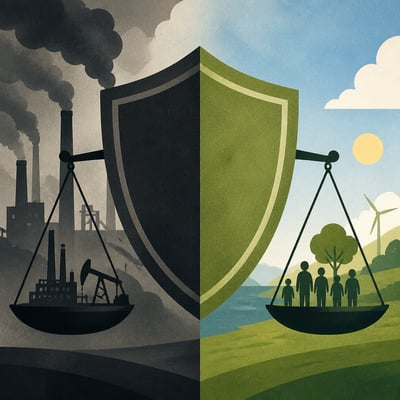
Utah enacted HB 222, requiring plaintiffs in certain climate-damage cases to provide clear and convincing evidence of unavoidable, identifiable harm directly caused by a statutory violation.
Critics say the standard could make climate liability claims against fossil fuel companies substantially harder to pursue, while supporters argue it protects consumers and preserves climate policymaking for elected officials. Similar measures are proposed or advancing in other states, alongside broader industry and federal efforts to limit climate litigation.
The biggest update is that Utah’s HB 222 has moved from a proposed liability shield to enacted law, making the causation and harm standard a concrete legal barrier in climate-damage cases. The story also now adds a separate countertrend: New York and Vermont are pursuing climate superfund laws that push polluter-pays liability in the opposite direction.
The story moved from a general trend of state-level climate-liability shielding to a confirmed enacted law in Utah, with HB 222 now setting a specific, heightened causation and proof standard. At the same time, the legislative push is broadening as Oklahoma advances more sweeping limits and industry-backed federal advocacy emerges.
- Utah enacted HB 222.
- HB 222 requires clear and convincing evidence of direct statutory violation and unavoidable damage.
- Oklahoma proposals now include fraud and deceptive-marketing claims.
- The American Petroleum Institute is supporting broader liability protections.
- Possible federal action is now part of the push for fossil-fuel liability limits.
The story has shifted from a general account of state liability-shield efforts to a more specific legal framing: the key battle now centers on which climate claims can survive, including emissions, fraud, deceptive-marketing, and failure-to-warn theories. The update also broadens slightly by clarifying that these protections are part of a wider multi-state push, not just Utah and Oklahoma.
State lawmakers and governors are advancing legal shields that make climate-damage lawsuits against fossil-fuel companies harder to win, while a smaller set of states keeps pushing polluter-pays laws in the opposite direction.