
 AI Governance
 Data Centers
 Drones
 Climate
 Privacy
 2026 Maine Senate
 Bob Dylan
REAP Solar Funding Dispute
Coverage from Earthjustice, Reuters, and others
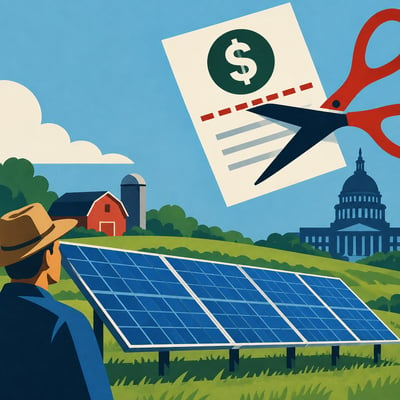
The Rural Energy for America Program (REAP) supports renewable-energy and efficiency projects for farms and rural businesses.
USDA’s changes to solar eligibility and funding conditions—including applying restrictions to projects already approved or underway—have prompted legal challenges from environmental, agricultural, and solar-sector groups. A central issue is whether applicants can still receive awards or reimbursements after proceeding under earlier rules; affected projects include Book Family Farms’ solar arrays in Illinois. USDA has cited farmland protection and reduced subsidies as reasons for its revisions, while plaintiffs challenge both the restrictions and how they were applied.
If you read one thing
It connects the revised rules, withdrawn support for existing projects, and the resulting lawsuit, giving readers a broad route into the dispute.
Best explainer
It clearly explains the new completion and energy-savings requirements and how they shift upfront costs onto applicants.
The evidence
It adds distinct context on REAP funding and reports the plaintiffs’ procedural and retroactivity challenges, including their account of USDA emails.
REAP rules sharply narrow solar access
USDA’s revised rules exclude ground-mounted solar and require projects to be completed and operational before applicants can seek funding; some applicants must also demonstrate a year of energy savings. This shifts financing and upfront-cost risk onto farms and rural businesses, with provisions scheduled to take effect October 16.
Previously selected projects face withdrawn support
Farmers and project partners say USDA applied changed eligibility rules to solar projects already selected for funding or under construction, leaving some responsible for costs incurred in reliance on expected reimbursement. Reported examples include a canceled $446,000 reimbursement; the status of prior awards remains disputed.
Litigation is the main route to contest the changes
Farmers, solar businesses, and advocacy groups have sued USDA, challenging the restrictions and their retroactive application under the Administrative Procedure Act and other legal theories. The suit also contests the agency’s farmland-protection rationale, and no resolution is reported.
68% percent
share of REAP grants and loan guarantees received by solar projects
“According to USDA award data obtained through a Freedom of Information Act request, solar projects received 68% of REAP grants and loan guarantees from 2011 through the first quarter of 2025.”
one year
energy savings demonstration period required before applying
“Since Congress authorized REAP in 2008, farmers could apply for grants covering up to half of a project’s cost before construction began. Under changes released last week and effective October 16, applicants must complete a project and demonstrate one year of energy savings before applying for funding.”
0.05% percent
U.S. farmland occupied by solar projects
“The article disputes USDA’s farmland rationale. Solar projects occupy about 0.05% of U.S. farmland, while corn ethanol uses more than 65 times as much land; solar generates about 70 times more transportation energy per acre.”
more than 65 times
land used by corn ethanol compared with solar projects
“The article disputes USDA’s farmland rationale. Solar projects occupy about 0.05% of U.S. farmland, while corn ethanol uses more than 65 times as much land; solar generates about 70 times more transportation energy per acre.”
429 kilowatts
combined capacity of the two solar arrays
“The policy has also left some farmers liable for project costs after funding was cancelled. USDA cancelled $446,000 in reimbursement for Book Family Farms in Dixon, Illinois, after the family began constructing two solar arrays totaling 429 kilowatts to offset grain-drying energy costs.”
No material change: new reporting adds detail that applicants must demonstrate a year of energy savings before applying, but reinforces the existing requirement to complete projects before seeking REAP support and the resulting upfront-cost risk.
Previously
Farmers, solar businesses, and environmental organizations are challenging USDA changes to the Rural Energy for America Program (REAP). The dispute concerns narrowed solar eligibility, requirements to apply only after projects are operational, and whether revised rules can affect projects already selected for funding. The litigation leaves the availability of federal support uncertain for rural energy projects.
The update clarifies that revised rules may require projects to be operational before applicants seek funding, and adds USDA’s stated rationale for the restrictions. Some provisions were scheduled to take effect October 16, but the litigation remains unresolved.