
 AI Governance
 Data Centers
 Drones
 Climate
 Privacy
 2026 Maine Senate
 Bob Dylan
US Clean Power Grows Amid Rollback
Coverage from Heatmap, Council on Foreign Relations, and others
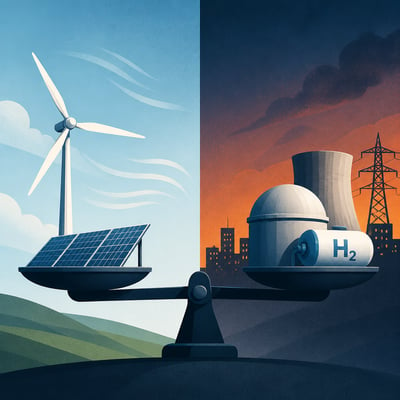
US wind, solar, and battery additions continue at high levels even as federal policy reduces tax credits, freezes or challenges projects, and pressures offshore wind developers to abandon leases.
State governments, developers, environmental groups, and courts are sustaining or contesting projects, while California advances offshore wind infrastructure despite federal opposition. The direction of emissions and electricity-sector change will depend on permitting, transmission, storage, reliability measures, and the durability of remaining policy support.
The story now places more emphasis on active federal and legal pressure against offshore wind and on the continued momentum of US clean-power additions despite that pressure. It also broadens slightly to include California’s advancing offshore wind infrastructure and a new global comparison of wind and solar output.
The story has shifted from a general policy-and-infrastructure debate to a more specific judgment that federal incentive rollbacks and anti-wind actions will not stop clean-energy buildout in the near term, but could materially worsen the post-2030 outlook. The new emphasis is on which technologies remain resilient and how grid infrastructure and remaining credits now determine whether deployment translates into lasting emissions cuts.
- One Big Beautiful Bill Act curtailed major federal clean-energy tax incentives.
- Solar and battery deployment is described as more resilient than wind.
- Federal courts blocked or reversed wind permitting pauses and stop-work orders.
- Post-2030 emissions path now depends on expiring credits and infrastructure.
- California continues building offshore wind-related infrastructure.
The story has broadened from a U.S. wind slowdown narrative into a wider clean-power conflict centered on grid reliability, policy rollback, and transmission bottlenecks. It now emphasizes that deployment is still growing despite federal resistance, while offshore wind remains the sharpest policy flashpoint.
- Reliability debates now center on dispatchable backup and long-duration storage.
- Solar and batteries still dominate recent U.S. capacity additions.
- Policy rollbacks have not stopped most modeled clean-energy deployment.
- Wind and solar reportedly exceeded natural gas globally for one month.
- State-level action continues even as federal offshore wind support weakens.
The story has sharpened from broad renewable resilience to a more specific wind slowdown narrative: U.S. wind is still coming online, but offshore and some onshore projects are now explicitly being delayed by federal actions, permitting fights, and grid constraints. At the same time, solar and batteries are emerging as the clearer near-term winners in the buildout mix.
- SunZia has begun operating in New Mexico.
- Federal offshore wind actions now include lease cancellations and stop-work orders.
- California is investing in offshore wind port and transmission infrastructure.
- BloombergNEF forecasts lower U.S. onshore wind additions.
- Wind growth is being slowed by tariffs, inflation, and long interconnection queues.
The story shifts from a broad renewables-versus-policy-conflict narrative to a more specific emphasis on battery storage, state-by-state deployment drivers, and the infrastructure bottlenecks that now constrain growth. Offshore wind remains the main stress point, but the framing now centers more explicitly on project economics, long lead times, and grid access risk.
The story has broadened from an offshore-wind conflict into a wider renewable-transition narrative that now emphasizes resilient solar growth, grid constraints, and emerging debate over clean firm power. Federal resistance is still central, but the frame is now more about how renewables keep advancing despite political pushback.
- Solar growth is especially resilient due to lower siting friction and falling costs.
- Data-center and electrification demand are strengthening electricity demand for renewables.
- Wind and solar briefly overtook natural gas in a monthly global comparison.
- Clean firm resources are now part of the policy debate.
- Battery storage is increasingly central to renewables integration.
The story is now more explicitly centered on federal offshore wind suppression, with lease cancellations, payout agreements, and permit restrictions taking clearer shape as active policy tools. California’s counter-buildout remains, but the updated framing adds stronger financial risk and financing uncertainty around large offshore wind projects.
The story shifts from a broad debate over renewables and reliability to a sharper policy clash over offshore wind, with California accelerating infrastructure while the federal government actively slows projects. Global wind and solar growth remains intact, but the new emphasis is on how permitting, financing, and infrastructure constraints shape whether that expansion can continue.
- California advanced the $4.7 billion Pier Wind terminal at the Port of Long Beach.
- Federal support was cut and offshore wind leases were canceled or challenged.
- Court rulings are affecting offshore wind permitting and lease activity.
- Infrastructure planning now centers on ports and transmission for offshore wind.
- Global wind and solar growth continues despite policy resistance.
Recent coverage contrasts the rapid growth of wind and solar with concerns about reliability, storage limits, and grid costs, while also highlighting policy fights over offshore wind and interest in clean firm power such as nuclear and hydrogen.