
 AI Governance
 Data Centers
 Drones
 Climate
 Privacy
 2026 Maine Senate
 Bob Dylan
Sustainable Aviation Fuel Faces Supply Limits
Coverage from Futura-Sciences, ETEnergyworld.com, and others
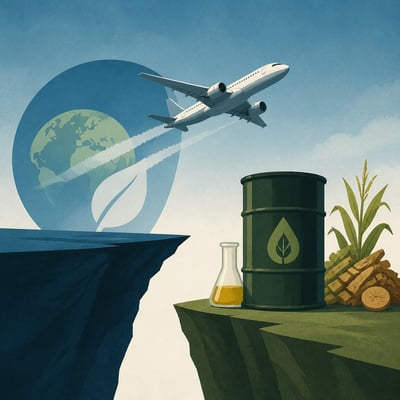
Aviation’s transition away from fossil jet fuel is being constrained by limited sustainable aviation fuel production, high costs, underused capacity and delays affecting newer aircraft and engines.
SAF can be used in existing aviation infrastructure and may substantially reduce lifecycle emissions, but current volumes remain far below global jet fuel demand. The material points to a transition requiring coordinated policy, fleet renewal, efficiency improvements and potentially slower growth in air traffic rather than reliance on SAF or a single breakthrough technology alone.
The main shift is a clearer, more urgent framing of aviation decarbonization as a multi-constraint problem: SAF remains limited, but the current version more explicitly ties the bottleneck to aircraft and engine delivery/maintenance delays and to the growing difficulty of preserving the 2050 net-zero target. The story also now emphasizes that SAF’s compatibility with existing infrastructure and lifecycle benefits support it as a practical near-term tool, not a standalone solution.
The core story is largely unchanged, but the framing has shifted toward a more explicit demand-management message: aviation decarbonization is now presented as requiring SAF plus efficiency, fleet renewal, and slower traffic growth rather than a technology-led solution alone. The current version also adds that energy shocks are increasing attention on SAF as a fuel-security issue, not just a climate tool.