
 AI Governance
 Data Centers
 Drones
 Climate
 Privacy
 2026 Maine Senate
 Bob Dylan
Solar Battery Storage And Grid Integration
Coverage from Amosolar, SolarQuotes, and others
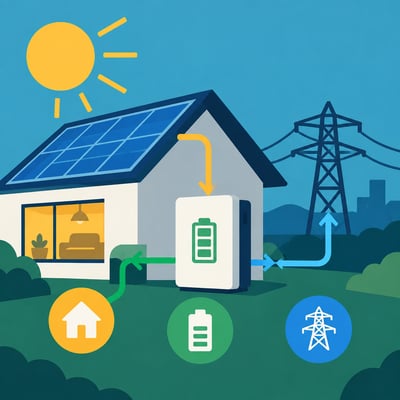
Solar battery storage links photovoltaic generation with household demand, backup needs, and grid constraints.
The strongest recurring signal is the need to match usable capacity, power output, inverters, coupling, backup circuits, seasonal production, safety requirements, and future loads. Storage can improve self-consumption and limit curtailment, while one source cites utility-scale capacity as a broader deployment benchmark; the evidence is mainly practical guidance and vendor-linked material rather than independent cost, adoption, or emissions analysis.
If you read one thing
Provides the broadest overview of how storage design, compatibility, safety, backup needs, and future demand shape practical value.
Best explainer
Explains why battery sizing and whole-system compatibility matter more than headline specifications.
The evidence
Adds focused coverage of solar curtailment, export constraints, and the conditions governing storage effectiveness.
System sizing and compatibility determine practical value
Current guidance treats battery value as a whole-system design problem rather than a matter of headline capacity. Load profiles, usable energy, power ratings, inverter and coupling compatibility, electrical integration, seasonal output, and future demand determine feasibility and performance.
Storage improves solar utilization but does not remove grid constraints
Batteries can shift surplus photovoltaic production into later demand and reduce curtailment or export pressure. Their effectiveness still depends on project-specific sizing, operating conditions, available export capacity, and wider grid upgrades.
Backup resilience depends on selective integration and lifecycle support
Residential storage is positioned to provide outage resilience and support selected backup circuits, but results depend on backup-load planning, controls, installation quality, safety and thermal conditions, maintenance, warranties, and ongoing manufacturer software support.
There was no material change: no new member articles were supplied, so the Topic remains centered on how solar batteries shift energy use, provide limited backup, reduce curtailment, and depend on system sizing, integration, safety, and grid constraints.
Previously
Solar battery storage links photovoltaic generation with household demand, backup needs, and grid constraints. The strongest recurring signal is the need to match usable capacity, power output, inverters, coupling, backup circuits, seasonal production, safety requirements, and future loads. Storage can improve self-consumption and limit curtailment, while one source cites utility-scale capacity as a broader deployment benchmark; the evidence is mainly practical guidance and vendor-linked material rather than independent cost, adoption, or emissions analysis.