
 AI Governance
 Data Centers
 Drones
 Climate
 Privacy
 Bob Dylan

WMO Reports Record Climate Imbalance
Coverage from Imperial News, Climate Global News, and others
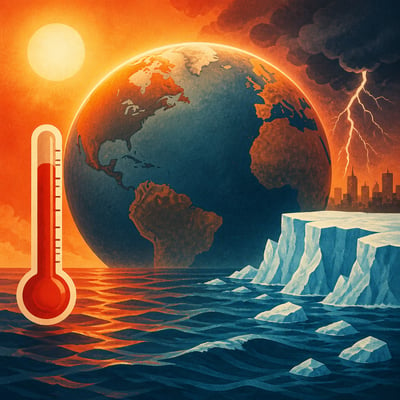
World Meteorological Organization assessments describe a climate system retaining record amounts of heat, with more than 91% of excess energy absorbed by the oceans.
The reports connect continued greenhouse gas increases with record ocean temperatures, marine heatwaves, glacier and sea-ice loss, rising seas, and intensifying heat, flooding, drought, wildfire, and cyclone risks. The findings point to persistent effects on ecosystems, health, food security, and coastal communities, while reinforcing the need for faster emissions reductions and stronger early-warning and climate-service systems.
The update largely confirms the existing climate-risk picture but adds that greenhouse-gas concentrations remain at record levels, ocean acidification is worsening, and some consequences may persist for centuries or longer.
The story now frames the climate crisis less as a broad set of worsening impacts and more as a governance-and-response problem, adding concrete remedies such as renewable electricity and the high seas treaty. It also slightly broadens the impact framing to emphasize infrastructure risks alongside water, food, health, and coastal exposure.