
 AI Governance
 Data Centers
 Drones
 Climate
 Privacy
 2026 Maine Senate
 Bob Dylan
Rainmakers Face Blame as Rains Shift
Coverage from The National Herald, Mercury News, and others
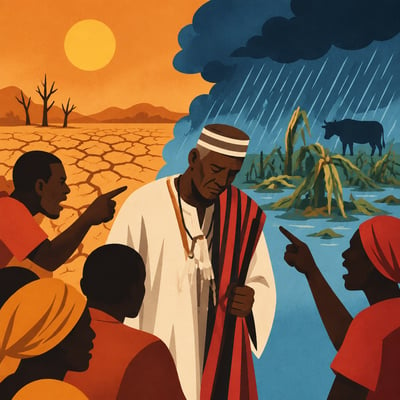
In Uganda and South Sudan, prolonged dry spells and sudden intense storms are damaging crops, livestock, and subsistence incomes while communities continue to hold traditional rainmakers responsible for failed or delayed rainfall.
Rainmakers have faced assaults, detention, forced refunds, and killings, illustrating how worsening weather uncertainty can intensify local blame and violence. In South Sudan’s Kapoeta region, reported rainy days fell from about 90 annually in the 1980s to 46 by the mid-2010s, alongside more intense rainfall.
If you read one thing
It provides the clearest and strongest-supported overview of rainfall volatility, livelihood damage, and escalating violence against rainmakers.
Rainfall volatility is undermining livelihoods
Rainfall is becoming less frequent but more intense, with Kapoeta’s average rainy days falling from 90 in the 1980s to 46 by the mid-2010s. Alternating droughts and sudden floods are damaging crops, livestock, food supplies, and subsistence incomes.
Rainmakers are absorbing community blame
Communities continue to hold rainmakers accountable when rainfall fails or arrives destructively, despite their lack of control over weather. Reported consequences include beatings, detention, forced refunds, and at least two rainmaker killings in South Sudan over the past two years.
46 rainy days per year
average annual rainy days in Kapoeta
“A study published in the International Journal of Environment and Climate Change found that the average annual number of rainy days in South Sudan’s Kapoeta region fell from 90 in the 1980s to 46 by the mid-2010s. When rain does arrive, it is often sudden and intense.”
at least two rainmakers killed
reported rainmaker deaths
“In South Sudan, at least two rainmakers have been killed in the past two years.”
at least two rainmakers
rainmakers killed in South Sudan
“In South Sudan, at least two rainmakers have been killed in the past two years.”
No new member articles were supplied, so there is no evidence of a material change to the topic.
Previously
In Uganda and South Sudan, prolonged dry spells and sudden intense storms are damaging crops, livestock, and subsistence incomes while communities continue to hold traditional rainmakers responsible for failed or delayed rainfall. Rainmakers have faced assaults, detention, forced refunds, and killings, illustrating how worsening weather uncertainty can intensify local blame and violence. In South Sudan’s Kapoeta region, reported rainy days fell from about 90 annually in the 1980s to 46 by the mid-2010s, alongside more intense rainfall.