
 AI Governance
 Data Centers
 Drones
 Climate
 Privacy
 2026 Maine Senate
 Bob Dylan
Paris Court Orders TotalEnergies Climate Plan
Coverage from Climate Home News, Union of Concerned Scientists, and others
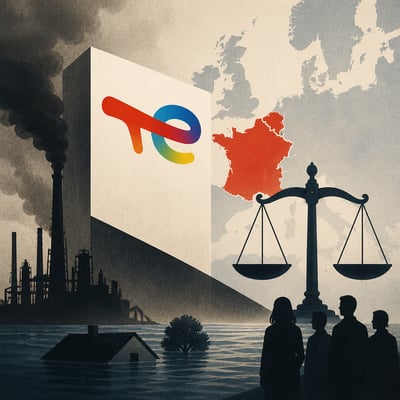
A Paris court ruled that TotalEnergies must revise its corporate duty of vigilance plan to identify and address climate risks from its activities, including Scope 3 emissions linked to customers’ use of its oil and gas products.
The decision establishes that France’s vigilance framework applies to climate impacts but stops short of ordering production cuts or halting new fossil fuel projects. A follow-up hearing will assess the adequacy of the revised plan, while related litigation in Belgium remains unresolved.
The main update is that the Paris court has now concretely ordered TotalEnergies to revise its vigilance plan, explicitly bringing Scope 3 climate risks under France’s duty of vigilance law. The ruling also adds timing and procedural clarity, with a six-month deadline, a January 2027 review, and a delayed Belgian case still pending.
The story has sharpened from a general climate-accountability dispute into a more specific legal push to require TotalEnergies to map and disclose Scope 3 emissions, with courts increasingly treating downstream fuel-use emissions as legally relevant. The Belgian case now appears more clearly linked as a parallel damages theory built off the same French duty-of-vigilance framework.
The story has moved from broad litigation over TotalEnergies’ climate liability to a concrete judicial mandate: a Paris court now requires the company to revise its vigilance plan to address downstream Scope 3 emissions. That turns the case into a governance-and-disclosure fight, while immediate production cuts or project bans remain off the table for now.
- Paris court ordered a revised climate vigilance plan.
- Scope 3 emissions tied to customer use must be included.
- Immediate project bans and production cuts were not ordered.
- Belgian case paused pending French proceedings.
- Follow-up hearing scheduled for January 2027.
The story has shifted from a general account of related climate lawsuits to a sharper legal question: whether TotalEnergies can be held liable not just for emissions and expansion, but for failing to align projects with Paris Agreement targets. The French and Belgian cases remain linked, but the framing now centers more explicitly on operational limits and climate compatibility.
European courts are advancing related climate lawsuits against TotalEnergies that test whether duty-of-vigilance laws can support liability for fossil-fuel expansion, indirect emissions, and climate-related damage. The most active cases are in France and Belgium, with judges sequencing decisions around each other.