
 AI Governance
 Data Centers
 Drones
 Climate
 Privacy
 2026 Maine Senate
 Bob Dylan
NYC Heat Pumps Expand Building Decarbonization
Coverage from Cornell Chronicle, TechXplore, and others
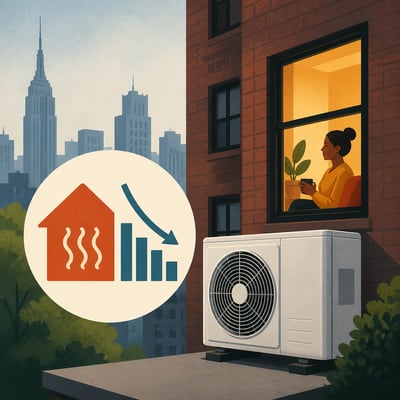
New York City is accelerating the use of electric heat pumps in public housing and other buildings as the city tightens emissions limits under Local Law 97.
Evidence from a Cornell study found that residents experienced equal or better comfort after a building conversion, while insulation further reduced heat consumption and peak heating demand. The shift could improve reliability and room-level control for residents, but wider adoption will depend on retrofit costs, older-building constraints, grid capacity, and installation and maintenance skills.
The story is now more focused on a broader, citywide heat pump rollout tied to practical building constraints and resident benefits, rather than mainly on a single NYCHA commitment and cost-reduction plan. The current version also strengthens the evidence base by emphasizing the Cornell study’s insulation-driven energy savings and peak-demand reduction.
The story has shifted from a general retrofit-and-pilot narrative to a concrete citywide public-housing deployment plan tied to a specific mayoral funding commitment and 2030 targets. It also adds a clearer policy driver: Local Law 97 is now framed as a direct catalyst for broader building retrofits.
- $38.4 million pledged for Beach 41st Street Houses heat pumps.
- Target set for 10,000 NYCHA apartments by 2030.
- Longer-term goal extends to all 177,000 NYCHA apartments.
- Bulk purchasing proposed to cut retrofit costs and simplify compliance.
- Cornell study showed 25–34% lower heat use after added insulation.
The story now emphasizes a clearer shift from pilot proof to broader rollout, with added evidence that building-envelope fixes and manufacturer adaptation are part of making heat pumps workable in older housing. It also reframes the main barrier more sharply as economics and rate design rather than technical feasibility.
New York City is expanding heat pump retrofits in public housing and older buildings, with recent deployments, pilot results, and policy fights all pointing to the same constraint: how to scale electrified heating affordably and reliably.