
 AI Governance
 Data Centers
 Drones
 Climate
 Privacy
 2026 Maine Senate
 Bob Dylan
Next-Generation Geothermal Gains Ground
Coverage from World Resources Institute, Deutsche Welle, and others
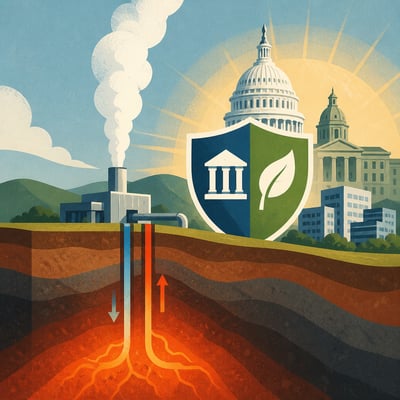
Enhanced geothermal systems and related technologies are being tested to make clean electricity and direct heat available in more parts of the United States, including California, the Northeast, and former oil and gas regions.
Public research, subsurface mapping, drilling expertise, and policy support are helping address technical and financing barriers, while projects such as Cornell’s Earth Source Heat system and Fervo Energy’s Cape Station provide early demonstrations. The field remains at an early stage, with high drilling costs, uncertain subsurface performance, permitting challenges, and limited operating data constraining wider adoption.
The story has broadened from general U.S. geothermal scaling efforts into a more specific picture of where enhanced geothermal is advancing and which project types are emerging. The biggest new development is the addition of concrete demonstrations and use cases, especially Fervo’s projects, Cornell’s direct-heat test, and Vermont’s shared heat-pump network.
The story now places much more weight on concrete policy execution: Congress, the Interior Department, and several states are actively moving geothermal from a planning theme into permitting, procurement, and cost-recovery changes. It also adds a clearer commercialization angle, with modular systems and broader non-hotspot deployment becoming central to the narrative.