
 AI Governance
 Data Centers
 Drones
 Climate
 Privacy
 2026 Maine Senate
 Bob Dylan
Michigan Utility Balances Renewables and Gas
Coverage from The Detroit News, PR Newswire, and others
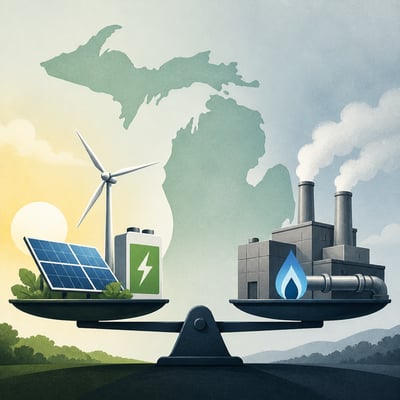
Consumers Energy has proposed a 20-year electricity supply plan that would add more than 19 gigawatts of solar, wind, and storage resources by 2040 while developing two fast-start natural-gas plants totaling about 1.
4 gigawatts. The plan is intended to replace retiring facilities, meet projected growth from data centers, manufacturing, and households, and provide capacity during periods of high demand. Michigan regulators must review the proposal, while environmental groups are challenging its reliance on new gas generation.
If you read one thing
It provides the clearest, best-supported overview of the plan's clean-capacity expansion, gas reliability strategy, and regulatory path.
Best explainer
It explains the environmental criticism of adding gas generation and the proposed cleaner alternatives.
Large-scale clean-capacity expansion
Consumers Energy's proposed portfolio would increase nameplate capacity from 14.1 GW in 2028 to 33.8 GW in 2040, including more than 19 GW of renewable and storage resources. The expansion is intended to address retiring facilities, renewable intermittency, and projected growth from data centers, manufacturing, households, and other large loads.
Gas remains part of the reliability strategy
The plan combines clean-energy growth with two fast-start natural-gas plants totaling about 1.4 GW, intended to replace retiring facilities and serve periods of high demand. Environmental advocates dispute the need for new gas and point to storage, virtual power plants, and other cleaner alternatives.
Execution depends on regulatory and rate-case approvals
The filing is a long-term blueprint rather than authorization for the full investment program. Michigan regulators must review the plan, while individual projects will require future approvals and rate cases; the utility projects annual customer-cost increases below 3%.
14.1 gigawatts
portfolio nameplate capacity
“If approved, the utility’s total portfolio nameplate capacity would increase from 14.1 gigawatts in 2028 to 33.8 gigawatts in 2040, an increase of about 140%. Consumers plans to add more than 19 gigawatts of renewable and clean-energy resources and build two natural gas plants at existing industrial sites in Bay and Genesee counties.”
1.4 gigawatts
combined generation capacity of proposed natural gas plants
“The two proposed natural gas plants would generate a combined 1.4 gigawatts. They would be built at the Karn Energy Center in Bay County and in Thetford Township in Genesee County, replacing retiring facilities and providing power during periods of high demand.”
more than 19 gigawatts
renewable and clean-energy resources to be added
“Consumers plans to add more than 19 gigawatts of renewable and clean-energy resources and build two natural gas plants at existing industrial sites in Bay and Genesee counties.”
below 3%
annual customer-cost increases
“The proposal is a blueprint rather than a request for a single 20-year spending authorization. Consumers would seek approval and funding for individual projects through future rate cases. The utility says annual customer-cost increases would remain below 3%, which it describes as less than the rate of inflation.”
The new reporting largely reiterates the existing proposal to pair more than 19 gigawatts of clean-energy additions with 1.4 gigawatts of gas capacity. It adds detail on projected demand, intermittency, portfolio scale, and future rate-case approvals but does not materially change the plan or its regulatory status.
Previously
Consumers Energy has filed a 20-year plan with Michigan regulators that would add more than 19 gigawatts of solar, wind, and battery storage by 2040 while also developing 1.4 gigawatts of fast-start natural-gas capacity. The proposal is intended to replace retiring facilities, meet peak demand, support clean-energy compliance, and manage customer costs, but it remains subject to approval by the Michigan Public Service Commission.
The proposal is now framed as a response to substantial load growth, particularly from data centers and manufacturing, rather than solely as a replacement and reliability plan. It also faces organized environmental opposition over the inclusion of two gas plants, adding a clear policy conflict to the regulatory review.