
 AI Governance
 Data Centers
 Drones
 Climate
 Privacy
 2026 Maine Senate
 Bob Dylan
California Marine Heatwave Impacts Expand
Coverage from Inside Climate News, Nature, and others
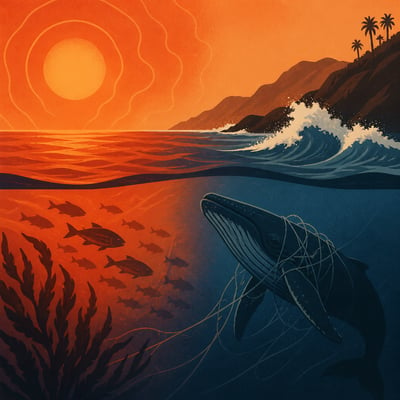
A persistent marine heatwave off California is disrupting coastal ecosystems and marine food webs while also increasing risks on land.
Reduced upwelling and altered prey conditions are linked to seabird starvation, whale entanglement exposure, harmful algal toxins, and longer-term kelp and abalone losses; warmer coastal waters are also contributing to higher humidity and may affect storm intensity. The event’s duration and trajectory remain closely tied to atmospheric patterns and developing El Niño conditions.
The story shifts from broad ecosystem degradation toward an active, prolonged California heatwave with immediate wildlife mortality, whale entanglement risks, toxin concerns, and potential coastal-weather hazards.
The story now places greater emphasis on ocean warming as a carbon-cycle problem, not just a habitat and restoration problem. It also adds a new ecological driver—El Nino and atmospheric conditions—as factors that can intensify marine heat waves and increase uncertainty.