
 AI Governance
 Data Centers
 Drones
 Climate
 Privacy
 2026 Maine Senate
 Bob Dylan
Maine Balances Solar Growth And Costs
Coverage from Canary Media, Inside Climate News, and others
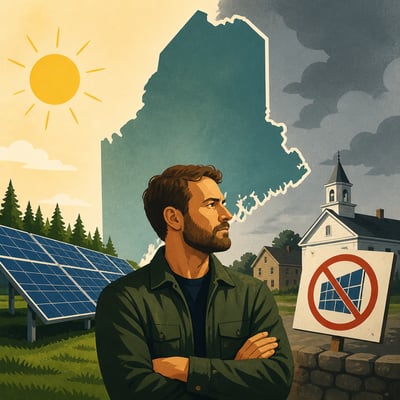
Maine is reassessing how quickly solar and community-solar projects should expand as residents and policymakers debate electricity costs, land use, permitting, and local decision-making.
The state has tightened net energy billing and added siting requirements, while municipalities including Sullivan have considered temporary pauses or new rules for larger projects. The debate also shapes Graham Platner’s climate platform, which pairs major clean-energy investment with stronger community input and affordability measures.
The story now centers more explicitly on a broader political fight over how to balance rapid clean-energy expansion with affordability and local control, rather than just a set of solar-rule changes. Graham Platner’s role has also become a new part of the narrative through his backing of a temporary pause in Sullivan and his wider climate agenda.
The story has shifted from a general backlash against Maine solar expansion to a more explicitly regulatory narrative about how state agencies and towns are reshaping the rules. The newest emphasis is on formal siting, billing, and decommissioning controls rather than just local resistance or market slowdown.