
 AI Governance
 Data Centers
 Drones
 Climate
 Privacy
 2026 Maine Senate
 Bob Dylan
Last Update: 09/22/2026 at 11:33 PM EST
Japan’s Matcha Faces Heat Stress
Coverage from Climate Change Dispatch, Nasha Niva, and others
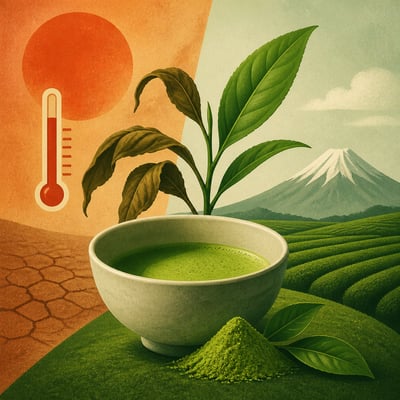
Warmer nights and unstable spring temperatures are putting pressure on Japan’s matcha production, especially by altering the balance of amino acids and bitter compounds that shape flavor.
Evidence indicates that heat can reduce quality and may affect tencha yields, although national production has continued to rise and recent records do not establish a clear decline caused by warming. Japanese breeders and growers are responding with genomic selection, adjusted harvest timing, and possible geographic diversification, while researchers caution that genetic screening still needs conventional field trials.
Looking Back
178 Day Timeline
Feb 8
Mar 8
Apr 5
May 10
Jun 7
Jul 5
Aug 2
All Articles3 articles
Interesting
Japan and China recorded rising matcha and green tea production through 2024 despite modest warming, while genomic selection offers options for managing heat-related quality effects.
8/4/2026 • Climate Science & Impacts • General
Japanese tea-breeding programs are using genomic screening as warmer spring conditions in Kyoto-Uji threaten matcha yields and flavor.
2/8/2026 • Climate Science & Impacts • General
Japan-based tencha and matcha growers are using genomic selection to identify heat-tolerance markers as warming disrupts spring temperatures and reduces tea yield and flavor quality.
7/28/2026 • Climate Science & Impacts • General