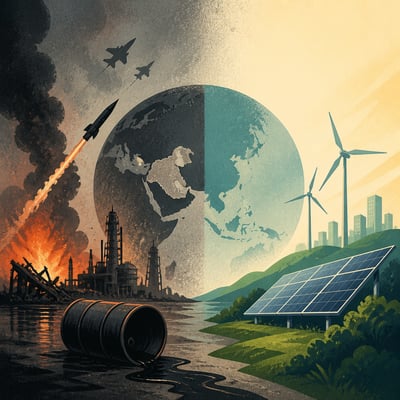
Iran War Disrupts Energy and FoodIran War Disrupts Energy and FoodCoverage from Milwaukee Independent, Heatmap News, and others
00/00/0000
DailyWeekly
The Iran conflict and disruption of shipping through the Strait of Hormuz have tightened oil and fertilizer supplies, raising fuel costs and exposing vulnerabilities in global food and energy systems.
China’s lower oil imports, reserves and large clean-energy and electric-vehicle sectors have helped limit some price pressure, while other countries have turned to coal or furnace oil. The shock is also supporting faster renewable-energy and electric-vehicle adoption in several markets, although affordability, supply constraints and continued fossil-fuel use are limiting and uneven the transition.
Looking Back
692 Day Timeline
Articles published over time. Hover any bar for the period and its article count.
Nov '24
Mar '25
Jun '25
Oct '25
Jan '26
May '26
Aug '26
History
07/23/2026
The story now places greater emphasis on the scale of the supply shock and on China’s specific tools for cushioning it, while sharpening the link to faster but uneven clean-energy and EV adoption. It also makes the agricultural and food-security consequences more explicit and immediate.
07/22/2026
The story has shifted from broad disruption and price volatility to a more specific emphasis on household, food-security, and transport impacts, with China identified as a key stabilizing factor in oil markets. It also now foregrounds a clearer behavioral response: cleaner energy, EVs, and resilient agriculture as direct adaptations to the shock.

 AI Governance
 Data Centers
 Drones
 Climate
 Privacy
 2026 Maine Senate
 Bob Dylan