
 AI Governance
 Data Centers
 Drones
 Climate
 Privacy
 2026 Maine Senate
 Bob Dylan
Indonesia’s Coal-Powered Aluminum Push
Coverage from SFGate, Barchart, and others
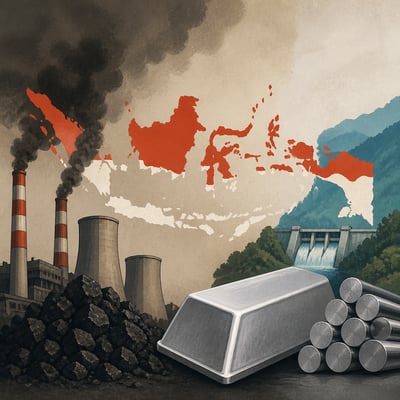
Indonesia is planning a sharp increase in aluminum and alumina production, potentially lifting aluminum output from about 1 million metric tons in 2025 to 14.
5 million metric tons by 2030. The expansion is expected to rely heavily on captive coal plants, many linked to Chinese investment, raising concerns about greenhouse gas emissions, air pollution in Sulawesi, pressure on bauxite reserves, and tension with Indonesia’s coal-reduction commitments. Supply disruptions in the Middle East have increased prices and strengthened incentives to accelerate development, while hydropower could offer a cleaner but slower alternative.
If you read one thing
It provides the clearest overall account of Indonesia’s rapid aluminum expansion, its reliance on coal, and the resulting climate implications.
Aggressive aluminum capacity expansion
Indonesia is pursuing a sharp increase in aluminum output, from about 1 million metric tons in 2025 to 14.5 million metric tons by 2030, alongside planned alumina production of 32.5 million metric tons. Disrupted Middle Eastern supply and stronger demand are reinforcing the commercial case for rapid smelter development.
Coal is shaping the expansion’s energy base
The smelter build-out is being tied to captive coal generation, with 32 prospective off-grid plants tracked for aluminum facilities. Indonesia is favoring coal’s speed and lower upfront cost over slower, more expensive hydropower, placing the industrial strategy in tension with coal-reduction and climate commitments.
Environmental costs and resource pressure constrain the model
Coal-powered smelting would add emissions to an energy-intensive industry, worsen toxic haze and community harms in areas such as Sulawesi, and remain difficult to quantify because emissions data are limited. If planned projects operate at scale, CREA estimates Indonesia’s bauxite reserves could be depleted in less than 12 years.
Chinese investment is relocating production capacity
Chinese companies are involved in about three-quarters of planned Indonesian aluminum projects, reflecting the movement of capacity into Indonesia after domestic production limits in China. The shift brings capital and industrial scale while potentially transferring emissions and scrutiny risks to a less regulated setting.
roughly 1.1 billion tons tons of carbon dioxide equivalent
annual greenhouse gas emissions from aluminum production
“Aluminum production is highly energy-intensive and accounts for about 2% of annual global greenhouse gas emissions, or roughly 1.1 billion tons of carbon dioxide equivalent, according to the World Economic Forum.”
1 million metric tons
aluminum production
“Indonesia wants to quadruple alumina output to 32.5 million metric tons by the end of the decade and increase aluminum production from about 1 million metric tons in 2025 to 14.5 million metric tons by 2030, according to the Centre for Research on Energy and Clean Air.”
32.5 million metric tons
planned alumina output
“Indonesia wants to quadruple alumina output to 32.5 million metric tons by the end of the decade and increase aluminum production from about 1 million metric tons in 2025 to 14.5 million metric tons by 2030, according to the Centre for Research on Energy and Clean Air.”
32 plants
prospective off-grid coal plants intended to power aluminum smelters
“CREA is tracking 32 prospective off-grid coal plants built by private companies to power aluminum smelters.”
about 1 million metric tons
Indonesia's aluminum production in 2025
“Indonesia aims to quadruple alumina production to 32.5 million metric tons by the end of the decade and increase aluminum production from about 1 million metric tons in 2025 to 14.5 million metric tons by 2030, according to the Centre for Research on Energy and Clean Air (CREA).”
Chinese firms emerge as the main force behind Indonesia’s coal-powered aluminum buildout
New reporting clarifies that Chinese companies are involved in about three-quarters of planned Indonesian aluminum projects, following China’s domestic production cap and redirecting investment toward coal-powered capacity in Indonesia. Advocates also argue that labeling aluminum a transition mineral allows these coal-powered projects to be presented as climate-compatible.
Previously
Indonesia is planning a sharp increase in aluminum and alumina production, potentially lifting aluminum output from about 1 million metric tons in 2025 to 14.5 million metric tons by 2030. The expansion is expected to rely heavily on captive coal plants, many linked to Chinese investment, raising concerns about greenhouse gas emissions, air pollution in Sulawesi, pressure on bauxite reserves, and tension with Indonesia’s coal-reduction commitments. Supply disruptions in the Middle East have increased prices and strengthened incentives to accelerate development, while hydropower could offer a cleaner but slower alternative.