
 AI Governance
 Data Centers
 Drones
 Climate
 Privacy
 2026 Maine Senate
 Bob Dylan
Indigenous Consent in Climate Projects
Coverage from Phys, Grist, and others
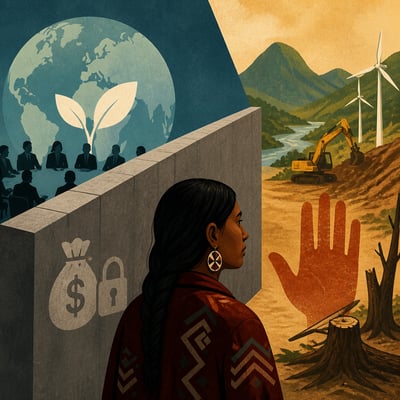
Climate finance and climate projects frequently fail to give Indigenous communities direct funding, enforceable consent, or meaningful decision-making power, despite their role in managing ecosystems and facing climate impacts.
Examples span global funding systems, carbon-market conservation in Kenya, renewable infrastructure proposals, and a discontinued geoengineering project. The central concern is that climate action can reproduce displacement and ecological harm unless it respects Indigenous land rights, sovereignty, and community-led stewardship.
The framing has sharpened: the story now emphasizes enforceable consent and decision-making authority, not just direct funding access, as the core failure in climate projects affecting Indigenous communities. It also adds the 2025 Green Climate Fund evaluation and broadens the geography slightly to the Arctic region while keeping the same underlying conflict.
The story now places stronger emphasis on specific 2026 examples showing how renewable-energy and geoengineering-related projects can still harm Indigenous rights, not just conservation and carbon-market conflicts. It also adds a concrete court-backed land-rights context in Kenya and a new U.S. sacred-site case involving the Yakama Nation.