
 AI Governance
 Data Centers
 Drones
 Climate
 Privacy
 2026 Maine Senate
 Bob Dylan
Hydropower Dams Need Better Governance
Coverage from Michigan State University, Scienmag, and others
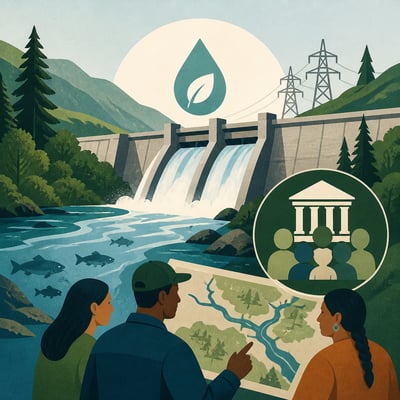
A Michigan State University-led study published in Nature Sustainability argues that large hydropower dams can cause lasting damage to river ecosystems, fisheries, and communities when they are planned as isolated energy projects.
It recommends river-basin planning, shared decision-making with local and Indigenous communities, and broader renewable energy portfolios to balance electricity production with ecosystem protection and climate resilience.
The update is mostly a reframing rather than a substantive change: the core critique of large hydropower and the call for basin-wide, participatory planning remain intact. The main shift is tighter language around cumulative river-system impacts and broader renewable portfolios as the solution.
The study’s framing has sharpened from a general governance critique into a more explicit climate-resilience argument: hydropower is increasingly unreliable as water flows become less predictable. It also places stronger emphasis on early community participation and integrated basin planning as the remedy.
The framing has broadened from a general call for better hydropower governance to a more specific sustainability prescription: integrate river-basin planning with diversified renewables and local energy control models. The new version also makes the policy lesson more explicit by tying it to World Commission on Dams guidance that major dam-building countries did not adopt.
The framing has tightened from a broad call for stronger hydropower governance into a more specific research-backed argument that project-by-project dam planning is the core problem. The current version also adds a modest geographic broadening with Cambodia and Italy appearing in the supporting context.
The material centers on new Michigan State University research arguing that large hydropower dams need stronger planning and governance to avoid major ecological and social harms. It emphasizes river-system or basin-wide decision-making, early community participation, and shared authority models rather than isolated project-by-project approvals. The topic matters because hydropower is often treated as clean energy, but the evidence here stresses that renewable output does not automatically prevent damage to ecosystems, fisheries, and local livelihoods.