
 AI Governance
 Data Centers
 Drones
 Climate
 Privacy
 2026 Maine Senate
 Bob Dylan
Georgia Drought Fuels Wildfires
Coverage from E&E News by POLITICO, Decaturish, and others
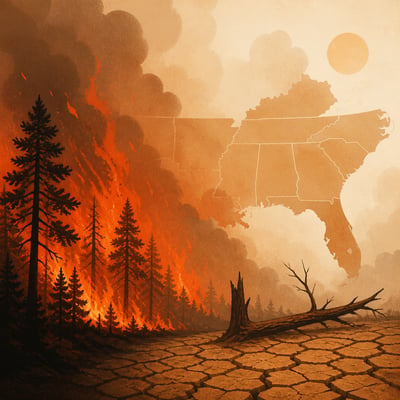
Georgia and neighboring parts of the Southeast are facing intensifying climate hazards, with prolonged drought helping drive large wildfires in spring and extreme heat creating additional health risks in summer.
The wildfire danger was amplified by low rainfall, heat, dry vegetation, and debris from Hurricane Helene, while persistent humid heat and warmer nights are reducing opportunities for recovery. Together, the events show how multiple weather stresses can compound fire, smoke, evacuation, and heat-exposure risks.
The story is reframed from a wildfire-and-heat episode into a broader compound-hazards narrative, with stronger emphasis on humid heat as an additional summer risk. The new version also sharpens the underlying drought picture and adds more explicit attribution to Georgia officials and foresters.
The story expands from a Georgia-centered wildfire emergency to a broader Southeast-wide hazard picture, with Florida acreage now quantified and wildfire risk tied more explicitly to low water levels and extreme heat. The addition of humid-heat impacts reframes the episode as overlapping climate stressors rather than only a fire event.