
 AI Governance
 Data Centers
 Drones
 Climate
 Privacy
 2026 Maine Senate
 Bob Dylan
Extreme Weather Tests Grid Reliability
Coverage from Electrek, AOL.com, and others
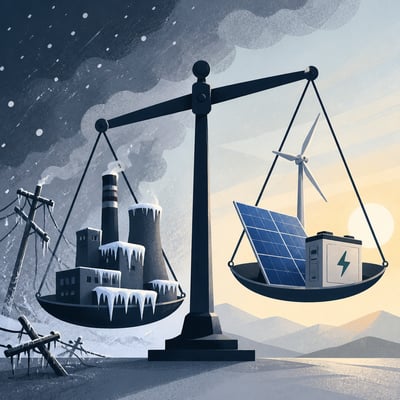
Extreme winter storms and heatwaves are driving scrutiny of how different parts of the U.
S. power system perform under stress. The material indicates that customer outages often stem from damaged distribution networks, while thermal generators can face fuel-delivery constraints and mechanical failures; wind, solar, and batteries can support reliability but remain dependent on weather conditions, system design, and complementary resources. The evidence points toward winterization, stronger local networks, storage, and a diverse generation mix rather than reliance on any single technology.
The story narrows from a broad winter-grid reliability debate to a more specific stress-test framing centered on extreme-weather performance across the U.S. power system. It adds clearer emphasis on distribution damage, thermal-generator fuel and mechanical constraints, and the role of policy debates around clean energy and offshore wind.
The framing has narrowed and sharpened around winter resilience: the current version puts more emphasis on frozen fossil infrastructure, fuel constraints, and winterization as the main causes of grid stress, with Texas becoming the dominant case study. It also introduces a more explicit regional contrast, using New England and the Mid-Atlantic to show how fuel and import limits can push systems back toward oil and gas.