
 AI Governance
 Data Centers
 Drones
 Climate
 Privacy
 2026 Maine Senate
 Bob Dylan
Extreme Heat And Attribution Research
Coverage from Scientific American, The New York Times, and others
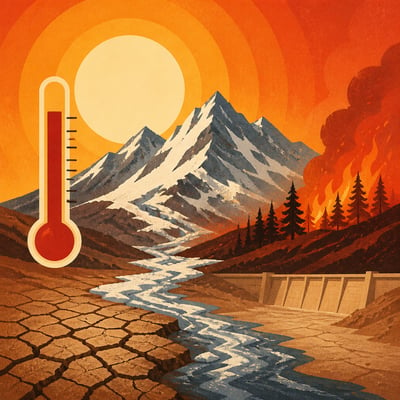
Recent coverage shows repeated record or near-record heat events across the U.
S. and Europe, with attribution studies linking much of the intensity and likelihood to human-caused warming. The strongest pattern is not a single event but a recurring shift toward earlier, hotter, and more damaging heat waves that strain health systems, water supplies, wildfire management, and planning assumptions.
The story has shifted geographically from U.S. heat risk to a major European heatwave, now framed as a record-setting, multi-country event with acute health and infrastructure impacts. Attribution work and reporting add a stronger climate-change connection, alongside growing emphasis on adaptation failures and emergency response.
- Heatwave spread across western and central Europe.
- June temperature records were broken in multiple European countries.
- World Weather Attribution linked the event to human-caused climate change.
- Schools, rail, hospitals, and energy systems were disrupted.
- Deaths and emergency-service surges were reported.
The story has broadened from Climate Central’s humid-heat attribution work into a wider, more immediate nationwide heat-risk narrative. The new framing emphasizes active forecast danger, overnight relief, wildfire and water impacts, and direct public-health response across multiple U.S. regions.
- Broad heat forecasts now cover the South, Midwest, Northeast, and West.
- Limited overnight cooling is identified as a major risk factor.
- Western heat is linked to snowpack loss and heightened wildfire conditions.
- Heat domes are highlighted as the main weather setup behind persistence.
- NOAA and the National Weather Service are new named actors.
The story has shifted from broad record-heat attribution to a narrower, more applied Climate Central analysis of dangerous humid heat and its health risks. It now emphasizes specific wet-bulb thresholds, the U.S. South/Southeast burden, and the use of a public mapping tool to communicate exposure.
- Dangerous humid heat is defined using daily maximum wet-bulb temperatures of 25C or higher.
- Climate Central’s Climate Shift Index: Humid Heat tool maps daily climate influence on humid heat.
- The U.S. South and Southeast are identified as the highest-exposure U.S. regions.
- Health risks are highlighted for children, older adults, pregnant people, and outdoor workers.
The story shifts from a California March heat wave to a broader late-spring global heat narrative, with new attribution work tying specific European extremes to human-caused warming. The emphasis is now on rising baseline temperatures, rapid heat accumulation, and the compounding effect of El Niño rather than one regional hot spell.
- May 2026 ranked among the warmest Mays on record globally.
- Ireland's record May heat was attributed to human-caused climate change.
- Copernicus cited Earth's energy imbalance as evidence of rapid heat accumulation.
- El Niño conditions were developing in the tropical Pacific.
- Climate Central began monthly briefings after NOAA canceled its updates.
The story has narrowed from a broad, multi-hazard U.S. spring weather pattern to a specific record March heat wave centered on California and the broader West. The new emphasis is on immediate public-health risk, accelerating snowmelt, and earlier wildfire-season concerns rather than the prior mix of storms, cold, and rain impacts.
- Record March heat is affecting Southern California and the broader West.
- Heat advisories and extreme heat warnings are being issued.
- Rapid Sierra Nevada snowmelt is reducing snowpack earlier than usual.
- Cal Fire is expanding wildfire staffing and response capacity.
- Scientists now frame the event as intensifying extreme heat linked to climate change.
The story has shifted from a European heatwave to a multi-hazard spring weather pattern centered on the United States. The key change is the framing: one amplified jet stream is now described as driving simultaneous extremes across several regions, with climate attribution presented as more mixed and uncertain.
- A highly amplified jet stream is driving simultaneous U.S. weather extremes.
- Southwest forecasts now threaten record March heat.
- Hawaii is seeing flooding rain from recurring Kona lows.
- Scientists describe March jet-stream behavior as partly seasonal and uncertain.
- The story now centers on multiple U.S. hazards at once, not a single heatwave.
The story has shifted from a broad emergency-response heatwave coverage to a more severe mortality-centered account, with reported excess deaths in France and Spain becoming the main new development. It also adds stronger evidence of record-breaking heat across western Europe and more explicit attribution from meteorological and climate agencies.
- Public health agencies reported roughly 1,000 excess deaths each in France and Spain.
- Temperatures reached or exceeded 40C in multiple regions.
- Several countries reported record highs during the same weather system.
- Heat is straining poorly adapted infrastructure and increasing cooling demand.
- France and Spain are now the hardest-hit countries in the coverage.
The story has shifted from a U.S.-centered heat-and-drought record to an active European heat emergency with immediate government response measures. The new focus is on public-health protection, infrastructure strain, and attribution evidence linking the event more directly to human-caused warming.
- France issued red heat alerts and public alcohol restrictions.
- Schools closed and outdoor activities were limited in several countries.
- Transport, wildfire, and nuclear water-supply risks are now part of the response.
- World Weather Attribution linked the event to human-caused warming.
- WHO Europe provided regional heat-death context.
The story has shifted from a European June heatwave and its immediate impacts to a new U.S.-focused record heat and dryness event, with an added forward-looking concern that a strong El Niño could intensify global warmth later. The framing now emphasizes not just current heat stress but a broader setup for additional temperature and weather extremes.
- NOAA confirmed March as the most abnormally hot U.S. month in 132 years.
- January through March was the driest on record for the contiguous U.S.
- More than 19,800 daily heat records and 2,000 monthly records were reported.
- A strong El Niño is forecast for later in 2026.
- The outlook now extends into possible 2027 temperature impacts.
The story has shifted from a broader May 2026 warmth-and-attribution narrative to a specific late-June European heatwave with acute operational and health impacts. The new version adds concrete evidence of widespread disruption and a stronger focus on adaptation failures in infrastructure and public services.
- Late-June heatwave hit western and central Europe.
- Multiple countries reported record temperatures and heat alerts.
- The event caused deaths, school closures, rail disruption, and power strain.
- Nighttime heat and humidity were highlighted as major health risks.
- Europe's infrastructure was described as poorly adapted to extreme heat.
The story has shifted from a regional March heat emergency to a broader climate-science narrative centered on May 2026 global and European heat records, with attribution work tying specific events to human-caused warming. It also adds a public-information angle, as former NOAA scientists and other experts step into more visible briefing roles.
- May 2026 ranked as the second-hottest May globally.
- Europe experienced an unusually early heatwave with record temperatures.
- Ireland’s record May heat was attributed to human-caused climate change.
- Former NOAA scientists continued monthly climate briefings after federal cutbacks.
The story has narrowed from a broad multi-hazard spring weather pattern to a specific record March heat wave in the western U.S., with stronger emphasis on immediate health, snowpack, and wildfire consequences. It also shifts from atmospheric explanation to concrete response and preparedness impacts.
- Record March heat wave centered on California and the western U.S.
- Dangerous overnight heat is elevating health risks.
- Sierra Nevada snowpack is melting earlier than usual.
- Cal Fire expanded wildfire staffing and response capacity.
- Heat advisories and extreme heat warnings were issued.
The story has shifted from a single headline about exceptional March U.S. heat and a possible later El Niño into a broader account of simultaneous spring extremes across the country. The new emphasis is on jet-stream-driven multi-hazard disruption, with stronger focus on Southwest heat, Hawaii rainfall, and West fire risk.
- Multiple extreme weather types are happening simultaneously in mid-March 2026.
- The jet stream is now cited as the main mechanism organizing the pattern.
- Hawaii's repeated kona lows are linked to unusually warm Pacific waters.
- Early fire-season risk in the West is becoming a recurring concern.
- Some experts describe March jet stream behavior as partly speculative.
The story has shifted from a Europe-focused heat emergency to a U.S.-centered climate extremes update, with March setting an unprecedented heat benchmark and El Niño emerging as the main forward-looking risk. The emphasis is now less on immediate crisis response and more on record heat, dryness, and the possibility of additional global warming later in 2026.
- March was the most abnormally hot month in 132 years of continental U.S. records.
- January through March was the driest on record for the contiguous United States.
- A strong to super-strong El Niño may develop later in 2026.
- El Niño could push global temperatures to new records in late 2026 or 2027.
- The link between human warming and stronger El Niño is suggested but unsettled.
The story has shifted from broadly describing a record-breaking heatwave to emphasizing active emergency management and concrete restrictions across Europe. The biggest new element is the addition of a climate attribution study saying human-caused warming made the event far more likely and intense.
- Public alcohol consumption bans and event limits were introduced in France.
- Train cancellations and canceled concerts and sports disrupted daily life.
- Officials flagged water-system stress and nuclear cooling risks.
- Scientists said human-caused warming made the heat wave much more likely.
- Paris and other countries expanded cooling and activity restrictions.
The story has shifted from a U.S.-focused extreme-heat pattern to a European heat crisis centered on France and Spain, with confirmed excess mortality and major service disruptions. The new coverage also puts stronger emphasis on climate attribution and poor adaptation rather than just weather severity.
- France reported sharply higher mortality during the hottest week.
- Spain faces another heatwave after a deadly June.
- Schools, museums, and transport services are being disrupted.
- Wildfires, drought, and drowning incidents are recurring secondary impacts.
- Poor adaptation of homes and infrastructure is now a central theme.
The story shifts from long-term humid-heat attribution to near-term, nationwide extreme-heat coverage. The new emphasis is on active heat domes and forecasted risks across more U.S. regions, along with wildfire and ecological impacts.
- Forecasts show dangerous heat across multiple U.S. regions.
- Heat domes and high-pressure ridges are trapping hot air.
- Western heat and dryness are increasing wildfire danger.
- Early-season heat waves are highlighted as especially disruptive.
- Ecological impacts on forests, wildlife, and marine species are noted.
The story has shifted from European heatwaves to a broader analysis of dangerous humid heat and climate attribution, with Climate Central supplying the main evidence. The focus is now on wet-bulb temperature risk, U.S. regional hotspots, and direct health impacts on vulnerable populations.
- Dangerous humid heat is measured using wet-bulb temperature.
- Climate Central says climate change added roughly three weeks of dangerous humid heat globally in 2024.
- Some U.S. areas exceed 100 dangerous humid heat days annually.
- Climate Central provides a Climate Shift Index for humid heat.
- The risk focus includes children, pregnant people, athletes, and outdoor workers.
The story has shifted from a broad pattern of U.S. and European heat extremes to a more focused account of a late-May-to-late-June 2026 European heatwave sequence causing direct infrastructure and health disruptions. The updated coverage adds concrete impacts and a wider set of European countries, while strengthening the attribution framing from general warming influence to materially increased likelihood and severity.
- Heatwaves caused rail disruptions, buckled tracks, and road damage.
- A nuclear reactor was shut down because cooling water was too hot.
- Governments issued widespread heat alerts, school closures, and travel warnings.
- Reported heat-related deaths and drowning deaths were included.
- Coverage spans Western, Central, and Northern Europe.
The current version largely confirms the previous narrative, while extending the coverage into July and sharpening emphasis on mortality, emergency response, and wildfire management.
The story broadens from mainly U.S. West and Europe heat episodes to a wider pattern spanning the central and eastern United States as well. It also adds new emphasis on operational stress in energy, water, hospital, and aviation systems, not just health and transport disruptions.
The story has been refined from a broad heat-and-attribution pattern into a more specific emphasis on early and prolonged heat, with stronger attention to blocking patterns and the unresolved scientific question of circulation changes versus simple warming amplification. The update also broadens the operational impact framing to include planning assumptions for governments and insurers.
The story has broadened from repeated heat extremes and attribution into a more specific operational-risk narrative, with Europe emerging as the clearest harm cluster and new emphasis on deaths, service disruptions, and system strain. The current version also sharpens the timing pattern, highlighting unusually early March heat in western North America and dense late-June impacts in Europe.
The story shifts from a general run of severe heat events to a sharper, more structural framing: repeated extremes are now being tied to earlier-than-normal seasonal timing, broader regional warnings, and mounting pressure on planning and infrastructure. The new version also broadens the geography and foregrounds forecasts and attribution work as a continuing signal rather than isolated episodes.
The story has broadened from a mostly western U.S. heat-and-water-supply narrative into a clearer U.S.-and-Europe heat-impact story, with more emphasis on immediate public-health, transport, and preparedness consequences. The core attribution to human-caused warming remains intact, but the framing now highlights operational disruption and adaptation lag more explicitly.
The story broadens from mostly regional Western U.S. heat attribution into a wider late-spring to early-summer climate picture that includes global temperature records and unusually warm oceans. El Niño is now part of the framing as a short-term amplifier layered on top of long-term human-caused warming.
- Coverage now includes a second-hottest May and unusually warm ocean temperatures.
- El Niño development is cited as an added short-term climate factor.
- Copernicus Climate Change Service now appears in the reporting.
- The geographic scope expands from the West to global oceans.
The story narrows from broad regional heat coverage to a more specific emphasis on attribution and knock-on impacts, especially in the western U.S. and Ireland. The new version also foregrounds planning and adaptation responses more explicitly, while dropping some of the earlier policy and central U.S. emphasis.
The story has broadened from a Southwest/Western heat narrative into a wider transatlantic heat-risk story that now includes the central U.S. and more explicit policy pressure in Europe. The updated framing also places stronger emphasis on adaptation and emissions-policy responses alongside the repeated attribution findings.
The story has broadened from a mostly western U.S. heat-and-snowpack narrative to a more explicit multi-region extreme-heat story that now includes western Europe. The current version also puts greater emphasis on direct operational impacts—especially public health, electric demand, and preparedness gaps—rather than just temperature records and climate attribution.
The story broadens from a general record-heat and attribution narrative into a more explicit analysis of warming trends over time, with city-level summer heat expansion and broader U.S. heat exposure now emphasized. The West remains the core hot spot, but the framing is more clearly tied to operational impacts on water, health, and planning.
Recent coverage shows a sustained run of record and near-record heat across the U.S., especially the Southwest and broader West, with attribution studies tying much of the anomaly to human-caused warming. The same heat pattern is repeatedly linked to snowpack loss, water stress, wildfire risk, and growing pressure on local preparedness.