
 AI Governance
 Data Centers
 Drones
 Climate
 Privacy
 2026 Maine Senate
 Bob Dylan
DNA-Guided Ecosystem Restoration
Coverage from The Tri-City Record, WLWT, and others
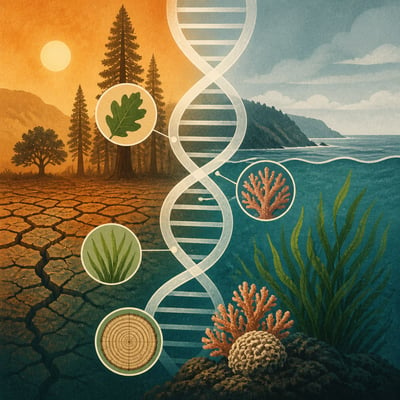
Researchers are using DNA sequencing to identify climate-adapted traits in California oaks, redwoods and eelgrass, alongside similar work on heat-tolerant corals.
The goal is to improve restoration by selecting, breeding or moving organisms that may better withstand heat, drought, wildfire, low light and other changing conditions. Most applications remain experimental or early-stage, and scientists emphasize that genomics can support restoration but cannot replace emissions reductions or broader ecosystem protection.
The story now adds more concrete, field-tested examples of genomics-guided restoration, especially in California oaks and a Mission Bay eelgrass hybrid, making the approach feel more operational than before. It also broadens the coral work into sequencing symbiotic algae and selective breeding, while reiterating that most applications are still early-stage.
The story has shifted from experimental conservation genomics to more applied restoration work, with the new version emphasizing genome-guided selection and breeding for specific field conditions in California ecosystems. It also broadens the climate stress context beyond warming to include drought, flooding, wildfire pressure, and low-light coastal stress.