
 AI Governance
 Data Centers
 Drones
 Climate
 Privacy
 2026 Maine Senate
 Bob Dylan
Deep-Sea Mining Threatens Pacific Ecosystems
Coverage from Newstarget, The New York Times, and others
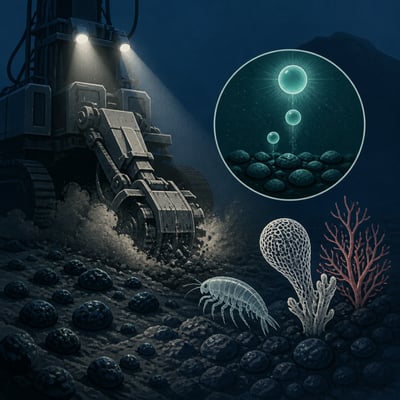
Deep-sea mining companies and regulators are advancing work in the Pacific’s Clarion-Clipperton Zone, where polymetallic nodules contain minerals used in batteries and other energy technologies.
Research is simultaneously revealing extensive, poorly understood biodiversity and possible ecological functions associated with the nodules, while tests have documented habitat disturbance and sediment plumes. The central issue is whether commercial extraction should proceed before scientific understanding, environmental safeguards and international rules are sufficiently developed.
The story now places more emphasis on the operational push toward commercial extraction, including U.S. permitting acceleration, while also sharpening the environmental case with the newly highlighted dark-oxygen question and the role of nodules in seafloor processes. The framing shifts from general uncertainty to a more explicit clash between near-term mining progress and unresolved international rules and ecological safeguards.
The story has shifted from describing exploratory concern to a more explicit permitting-and-governance race: regulators and companies are still pushing toward commercial extraction, while scientists emphasize that the ecological costs remain poorly understood. The new version also slightly broadens the scientific framing by emphasizing unresolved recovery times and the need for further confirmation of dark-oxygen claims.