
 AI Governance
 Data Centers
 Drones
 Climate
 Privacy
 2026 Maine Senate
 Bob Dylan
Cuba Accelerates Solar Amid Fuel Crisis
Coverage from CNN, Jacobin, and others
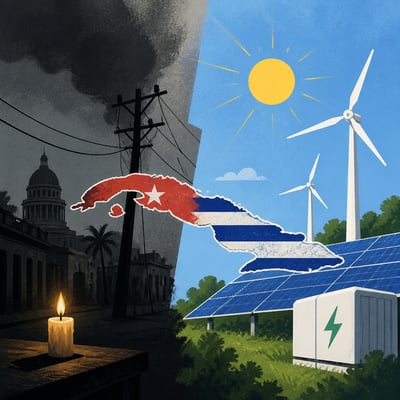
Cuba is expanding solar power rapidly as fuel shortages, disrupted oil supplies, and an aging grid drive prolonged blackouts.
Chinese equipment, financing, and construction support have helped bring roughly 1 gigawatt of solar capacity online and advance plans for dozens more solar parks, but the system remains dependent on fossil fuels and lacks sufficient grid-scale storage. The transition could reduce exposure to imported-oil disruptions, yet its effect on everyday reliability is still limited and a broader shift would require substantial external financing and grid investment.
The story now emphasizes scale and financing: Cuba’s solar buildout has reached about 1 gigawatt, and the gap between current progress and a much larger renewable transition is quantified more sharply. It also adds that blackouts are being worsened by disrupted oil deliveries, while household reliability gains remain limited.
The story now has sharper evidence that Cuba’s solar buildout is larger and more advanced than before, with roughly 50–52 parks online and renewable generation reaching about 10%. It also newly emphasizes the scale of the financing challenge and the uneven real-world benefit, especially for households still facing severe blackouts.
- Roughly 50–52 solar parks are now online in Cuba.
- Cuba is targeting 92 solar parks totaling about 2 gigawatts by 2028.
- Solar’s share of electricity has risen to about 10%.
- Near-complete renewable electricity would require billions in investment.
- U.S. and other foreign oil supply dynamics are now part of the story.
The story has shifted from a general renewable transition under constraint to a more concrete and accelerated solar buildout, with Chinese-supplied equipment and financing now clearly central to execution. The main new emphasis is on operational progress, while reliability limits and funding gaps remain unresolved.
Cuba is facing persistent blackouts and fuel shortages while trying to scale solar, wind, storage, and grid upgrades to reduce dependence on imported oil. Chinese financing, national transition targets, and outside modeling all point to renewables as the main path forward, but implementation remains constrained by transmission losses, financing needs, and supply fragility.