
 AI Governance
 Data Centers
 Drones
 Climate
 Privacy
 2026 Maine Senate
 Bob Dylan
Community Energy Builds Resilient Cities
Coverage from Axios, Automate, and others
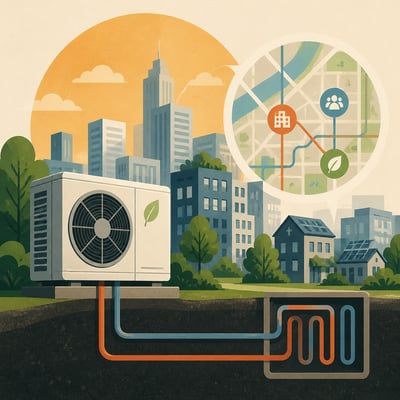
Cities and communities are increasingly being presented as active planners and participants in the transition to lower-emission energy systems.
Community energy planning, district heating and cooling, smart grids, heat pumps, storage, building upgrades and nature-based measures are framed as ways to manage rising demand, reduce emissions, improve reliability and lower household energy costs. The main implementation challenge is translating broad frameworks and public investment into locally appropriate projects that deliver benefits without widening affordability or access gaps.
The story shifts from a broad description of city-led low-carbon energy planning to a more implementation-focused framing centered on translating policy frameworks and public investment into local projects. The UK Warm Homes Plan remains a core example, but the new emphasis is on execution tools like adaptive codes, incentives and community participation to avoid equity gaps.
The story broadens from city-scale electrification planning into a wider local energy systems agenda that now includes community energy organizations, household upgrades, and UK policy support. It also becomes more explicit that implementation will hinge on funding, local capacity, and equity safeguards.
- UK Warm Homes Plan proposes up to £15 billion for home upgrades.
- Community energy organizations and residents are now explicit stakeholders.
- Thermal storage, geothermal exchange, and smart controls are newly specified.
- Affordability and displacement are named implementation concerns.
- Local renewable assets and batteries are linked to household upgrade policy.
The framing has shifted from a broad urban electrification and emissions story to one emphasizing concrete implementation tools. The current version also broadens the resilience lens beyond energy into building design, cooling, stormwater, and materials use.
Cities and governments are pairing heat pumps, district energy, and community energy planning to manage electrification, reduce emissions, and ease pressure on aging grids and urban infrastructure.