
 AI Governance
 Data Centers
 Drones
 Climate
 Privacy
 2026 Maine Senate
 Bob Dylan
Climate Hazards Disrupt Elections
Coverage from The Guardian, OpEdNews, and others
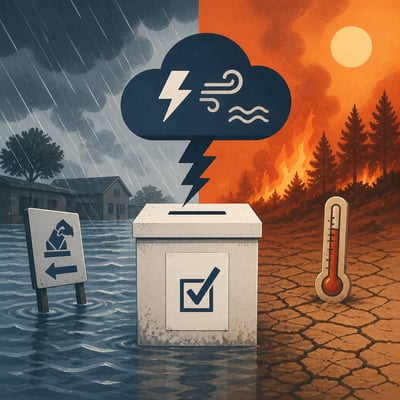
Climate-linked floods, wildfires, storms, and heatwaves are creating growing risks for election operations by damaging polling infrastructure, restricting voter access, displacing communities, and straining election officials.
International IDEA research identifies disruptions across dozens of elections and warns that changing hazard patterns make traditional election planning less reliable. The main policy response is stronger climate-risk assessment, contingency planning, infrastructure protection, alternative voting options, and coordination between electoral and emergency authorities.
The story is largely stable, but the framing has shifted from a catalog of disruptions to a stronger warning that increasingly unpredictable hazard seasons make election planning less reliable. The current version also adds a clearer implication that repeated disruptions could erode trust in election results, especially in fragile settings.
The story is now more quantified and operationalized: it moves from a general warning about climate disrupting elections to a documented pattern across dozens of elections and countries, with more concrete adaptation measures. It also adds a secondary policy concern that weakened disaster-response and climate-science capacity could worsen electoral disruption.
- At least 23 elections in 18 countries were disrupted in 2024.
- A review found 94 disaster-affected election events across 52 countries since 2006.
- Recommended adaptations now include early voting and mobile polling stations.
- Rural, low-income, and displaced communities are identified as most vulnerable.
- Weakened disaster-response and climate-science capacity may compound election disruptions.
The update mostly tightens the framing rather than changing the story: it shifts from a broad account of climate-related election disruption to a more explicit emphasis on operational election impacts and growing need for integrated climate risk planning. The only notable addition is the clearer emphasis on heat as a distinct and recurring operational threat.
The material centers on climate-linked natural hazards increasingly disrupting elections, with floods, wildfires, storms, and heatwaves affecting polling access, infrastructure, staff safety, and vote administration. International IDEA reports that these disruptions are becoming more frequent and more complex, especially in countries with weaker infrastructure or limited administrative capacity. The dominant policy response is better contingency planning, climate risk assessment, and coordination between election authorities and disaster agencies.