
 AI Governance
 Data Centers
 Drones
 Climate
 Privacy
 2026 Maine Senate
 Bob Dylan
Climate Change Reshapes Coffee Supply
Coverage from VegOut, Global Issues, and others
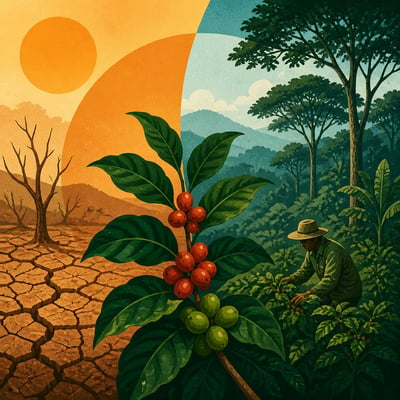
Climate change is increasing heat, drought, rainfall variability, and disease pressure across major coffee-growing regions, reducing yields and threatening bean quality.
Brazil and other producers are responding through hardier robusta and hybrid varieties, shade-grown systems, improved farm management, and efforts to expand production into new areas. These adaptations could help stabilize supply, but they require long-term research, financing for smallholders, and safeguards against deforestation and biodiversity loss.
The story has broadened from general climate pressure on coffee to a more specific adaptation agenda centered on breeding, farm practices, and new growing regions. The current version also adds stronger emphasis on smallholder financing constraints and land-use risks such as deforestation and biodiversity loss.
The story is now framed less as a broad climate threat to coffee and more as a slow adaptation race, with emphasis on how long it will take resilient varieties and agronomic changes to scale. It also sharpens the geographic focus in Brazil, especially Rondônia and São Paulo, while keeping the core climate-risk narrative intact.