
 AI Governance
 Data Centers
 Drones
 Climate
 Privacy
 2026 Maine Senate
 Bob Dylan
Clean Power Persists Through Policy Shifts
Coverage from Daily Kos, The North State Journal, and others
The U.
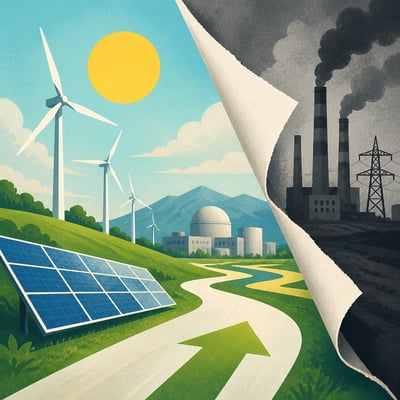
S. electricity transition is continuing despite federal actions that have delayed or canceled some renewable projects and changed the expected policy trajectory. Solar is expanding while wind growth slows, and fossil fuels still supply most electricity, leaving the pace of decarbonization dependent on planned clean-energy additions, grid upgrades, permitting, and technologies such as advanced nuclear and geothermal. MIT analysis suggests that much of the clean-capacity and emissions reduction expected under Inflation Reduction Act policies could still occur during the next decade, although the estimate is conditional on future investment and implementation.
If you read one thing
It provides the broadest overview of resilient clean-power deployment while clearly explaining the limits imposed by continued fossil-fuel reliance and policy reversals.
The evidence
It adds a direct account of declining fossil generation and expanding solar, wind, and battery capacity sustaining the transition.
Best explainer
It explains the practical policy and infrastructure steps—especially permitting, grid reliability, and clean firm power—needed to maintain momentum.
Clean-power deployment remains resilient despite policy reversals
The U.S. electricity transition is continuing even as federal actions obstruct or reverse parts of the clean-energy policy trajectory. The evidence supports persistent clean-power momentum, but not a completed transition or freedom from constraints such as fossil-fuel dominance, permitting, reliability, and other implementation barriers.
No new-member articles were supplied, so there is no evidence of a material change in the U.S. electricity transition since the prior state.
Previously
The U.S. electricity transition is continuing despite federal actions that have delayed or canceled some renewable projects and changed the expected policy trajectory. Solar is expanding while wind growth slows, and fossil fuels still supply most electricity, leaving the pace of decarbonization dependent on planned clean-energy additions, grid upgrades, permitting, and technologies such as advanced nuclear and geothermal. MIT analysis suggests that much of the clean-capacity and emissions reduction expected under Inflation Reduction Act policies could still occur during the next decade, although the estimate is conditional on future investment and implementation.