
 AI Governance
 Data Centers
 Drones
 Climate
 Privacy
 2026 Maine Senate
 Bob Dylan
Charlottesville Schools Approve Solar PPA
Coverage from Charlottesville, Information Charlottesville, and others
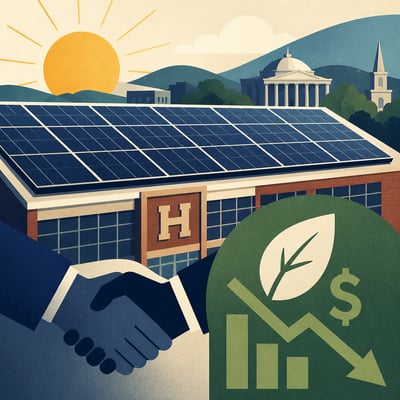
Charlottesville City Schools and the city agreed to a 25-year power purchase agreement with Madison Energy Infrastructure for a rooftop solar system at Charlottesville High School.
The 1.318 MWdc system is projected to generate about 1.738 million kilowatt-hours annually, cover 59% of the school’s electricity use, and avoid roughly $2.3 million in electricity costs over the contract term. Installation is expected to be completed in 2027, with projected emissions reductions exceeding 40,000 metric tons of carbon dioxide.
The story has become more concrete: the solar agreement now includes a specific system size, expected production, cost savings, emissions impact, and a 2027 completion target. It also clarifies the 25-year term and confirms third-party ownership by Madison Energy Infrastructure.
The story has shifted from a prospective solar deal to an approved agreement, adding clearer confirmation that the project is moving ahead. The new version also reframes the financing as a way to avoid upfront public capital costs and emphasizes a years-long effort behind the project.
The story has become more concrete: what was previously a financing-focused solar proposal is now a quantified, long-term rooftop solar agreement with specific savings and emissions estimates. The implementation details are also clearer, including Madison Energy Infrastructure’s role as installer, owner, and operator under a third-party model.
- 25-year rooftop solar contract now specified
- Madison Energy Infrastructure will own and operate the system
- Expected generation: 1.738 million kWh per year
- Projected $2.3 million in avoided electricity costs
- More than 40,000 metric tons of CO2 avoided
Charlottesville is moving ahead with a third-party solar power purchase agreement for its high school, with city and school officials projecting lower electricity costs, substantial rooftop generation, and long-term emissions cuts. The main tension is financing: the project depends on outside ownership because local capital funding cannot cover upfront installation costs.