
 AI Governance
 Data Centers
 Drones
 Climate
 Privacy
 2026 Maine Senate
 Bob Dylan
Canada Falls Short on Climate Targets
Coverage from Canada, Squamish Chief, and others
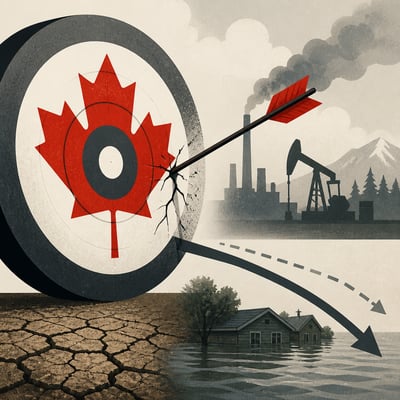
Canada is projected to fall well short of its 2030 emissions target, with independent modelling indicating reductions of roughly 18–22% below 2005 levels compared with the federal goal of 40–45%.
Government projections show deeper reductions under announced additional measures, but the gap between existing policy, implementation, and national targets remains substantial. Industrial carbon pricing, methane controls, clean electricity, electrification, and stronger federal-provincial coordination are identified as central areas for further action, while warming and extreme weather increase the practical costs of delay.
The story now adds a clearer policy-path framing: beyond the established emissions gap, government projections and additional measures are highlighted as potentially improving the trajectory, but only if implementation and policy assumptions hold. It also broadens the consequences beyond mitigation to emphasize rising physical and economic risks, plus environmental monitoring and participation concerns.
The story is framed more sharply around a widening gap between Canada’s formal climate targets and the policies still expected to do the heavy lifting, with recent rollbacks making the shortfall look more entrenched. It also adds a modest governance layer, emphasizing provincial implementation and monitoring/data issues alongside the emissions gap.